

Order a Gin and Tonic tonight, and you’re drinking 17th-century malaria medicine. Spanish colonists learned cinchona bark relieved fever, and its bitter compound, quinine, became essential as the British pushed into malaria-ridden India — so bitter that colonists mixed it with soda and sugar, then added gin just to choke it down.
This glossary walks through exactly that kind of story: the fermentation, distillation, and terminology behind every glass on this site, explained plainly.
Pour a Gin and Tonic tonight, and you’re tasting one of history’s most reluctant medicines.
U.S. Prohibition

Photo | Sheriff’s deputies dumping illegal alcohol | Image credit: Wikipedia
Prohibition was a nationwide U.S. law banning the production and sale of alcohol, enacted under the 18th Amendment to the Constitution and lasting from 1920 to 1933.
It grew out of both religious and political motivations. On the religious side, the movement traces back over a century, led early on by the Methodist church and gradually spreading into a broader temperance crusade. On the practical side, hard liquor was typically drunk straight in that era, and widespread drunkenness was blamed for hurting workplace productivity.
But telling an entire nation “no more drinking, starting tomorrow” was never going to go smoothly. Bootlegging and smuggling flourished, giving rise to some of history’s most notorious gangsters — Al Capone chief among them. Eventually, the economic toll, rising crime, and growing public backlash led to Prohibition’s repeal in 1933.
Alcohol

Alcohol comes in many forms, spanning everything from industrial to medicinal use.
1・Beverage alcohol (ethanol)
- Used in drinks like beer, wine, and whiskey
- Moderate consumption can have a relaxing effect; excessive consumption carries health risks (liver disease, dependency, and more)
2・Medical alcohol
- Used in disinfectants and antiseptic wipes
- Highly effective at killing germs
3・Industrial alcohol
- Used as a solvent, fuel, or raw material in chemical synthesis
- Not intended for consumption
Properties of Alcohol
- Solubility: Dissolves easily in water (especially lower molecular weight alcohols)
- Boiling and melting points: Rise as molecular weight increases
- Toxicity: Varies by type and quantity, but methanol and high concentrations of ethanol are highly toxic
Depending on its chemical structure and intended use, alcohol comes in many forms with distinct properties, and it plays a role in countless everyday and industrial applications.
Alcohol vs. Ethanol
The difference between “alcohol” and “ethanol” trips a lot of people up, so here’s a quick breakdown.
Alcohol
- Definition: A general term for organic compounds where a hydroxyl group (–OH) is bonded to a carbon atom
- Types: Many varieties exist, including methanol (CH₃OH), propanol (C₃H₇OH), and butanol (C₄H₉OH)
Ethanol
- Definition: A specific type of alcohol — C₂H₅OH (ethyl alcohol)
- Uses: Found in beverages (alcoholic drinks), disinfectants, fuel, solvents, and more
- Characteristics: A colorless liquid that can have a relaxing effect in moderate amounts, though excessive intake carries health risks
Quick Summary
- Alcohol: A broad category covering many types of compounds
- Ethanol: One specific type of alcohol, and the one most commonly encountered in everyday life
In short, “alcohol” is the umbrella term, and “ethanol” is one specific substance within that category.
International Wine and Spirit Competition (IWSC)

Photo | The IWSC logo | Image credit: Wikipedia
The IWSC is an annual competition dedicated to recognizing quality and encouraging growth across the wine and spirits industry.
Founded in 1969, it draws entries from wines, spirits, and whiskies around the world, judged by a panel of experts selected globally through a rigorous process that combines blind tasting with chemical analysis.
Each category awards Gold, Silver, and Bronze medals, with the year’s single best product chosen from among the Gold medalists to receive the top trophy.
Since the 2000s, Japanese products have picked up a growing number of awards, helping put Japan’s spirits on the global map.
Activated Carbon
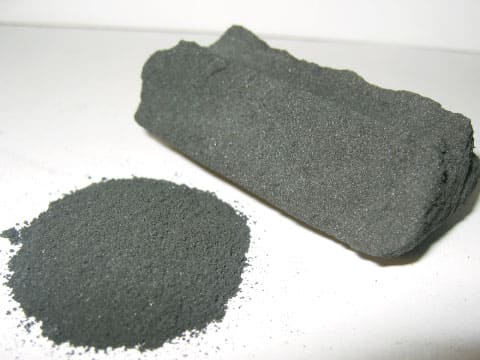
Photo | Activated carbon | Image credit: Wikipedia
Activated carbon is a porous carbon material with an extremely large surface area.
Its surface is covered in countless microscopic pores, which is what gives it such strong absorption power. Activated carbon is typically produced through two main steps:
- Carbonization・・・Organic materials like wood, coconut shells, or coal are carbonized at high temperatures.
- Activation・・・The carbonized material is treated further at even higher temperatures to form its characteristic porous structure.
Properties of Activated Carbon
- High absorption capacity・・・Its porous structure efficiently absorbs chemical compounds and impurities.
- Large surface area・・・Tiny particles pack an enormous amount of internal surface area, which is what drives its strong absorption power.
Why Activated Carbon Is Used in Spirit Production
In the production of alcoholic beverages, activated carbon is typically used for three main purposes:
- Removing impurities・・・It absorbs and removes byproducts generated during fermentation and distillation, such as fusel oils and volatile sulfur compounds, improving the flavor and aroma of the final product.
- Adjusting color・・・In some spirits, activated carbon is used to keep the liquid clear. It’s especially common in white wine and vodka production, where it removes unwanted pigments and tannins.
- Improving flavor・・・By absorbing compounds responsible for unpleasant tastes or odors, activated carbon helps mellow out the final product and make it easier to drink.
Specific Examples
- Vodka・・・Passing the spirit through activated carbon after distillation increases purity and creates a smoother mouthfeel. Vodka production and history
- Rum・・・Activated carbon is sometimes used after aging to remove unwanted flavor compounds and achieve a clearer profile. Rum production and history
- Whiskey・・・Charcoal filtration can happen before or after aging. This process, known as charcoal mellowing, is a defining step in the production of Tennessee whiskey in particular.
Activated carbon plays an essential role in refining the quality of the final product, helping bring out the clean, pure character that defines great spirits.
Heat of Dilution

Heat of dilution refers to the heat released or absorbed when a solvent—usually water—is added to dilute a solution. When water is added to concentrate a strong solution down, the interaction between solute and solvent causes an energy change that shows up as heat, either given off or taken in.
This effect falls into two main types
- Exothermic reactions・・・Adding water to concentrated sulfuric acid, for example, releases a large amount of heat.
- Endothermic reactions・・・Dissolving certain compounds, such as ammonium chloride, actually absorbs heat instead.
Why Heat of Dilution Matters in Spirits Production
Distillers pay close attention to heat of dilution for a few key reasons
- Adjusting alcohol content・・・Spirits like whiskey, vodka, and rum come off the still at very high proof. Water is added afterward to bring them down to a drinkable strength, and managing the heat released during this step matters. If the temperature rises too much, it can affect flavor and aroma, which is why dilution is usually done gradually with careful temperature control.
- Keeping quality consistent・・・Distillers often adjust the temperature of the water used for dilution to avoid sudden temperature swings. Careful control here helps stabilize the final product’s quality, and preventing a sharp temperature spike also limits alcohol evaporation, preserving delicate flavor compounds.
- Effects on aging・・・Dilution typically happens after aging, and some producers age the spirit again afterward to let any heat-related effects settle and the flavors integrate more smoothly.
Heat of dilution plays a key role in adjusting alcohol content and maintaining quality during spirits production. By carefully managing temperature changes during dilution, distillers preserve flavor and quality, giving consumers a consistently well-crafted drink.
Grain

In the world of spirits, “grain” simply refers to cereal grains. In whisky production, “grain whisky” is whisky made primarily from grains other than 100% malted barley—typically wheat, corn, or a mix of unmalted cereals.
The rise of grain whisky made it possible to create blended whiskies at a lower cost than pure malt whisky made entirely from malted barley, and this played a major role in bringing whisky to markets around the world.
Grain whisky tends to have a milder, more neutral flavor than single malt. It’s rarely bottled and sold on its own—most of it goes into blended whisky as a key component.
Advantages of Grain Whisky
- Cost・・・Cheaper to produce than malt whisky.
- Versatility・・・Blends easily with other whiskies.
- Large-scale production・・・Continuous (column) stills allow for high-volume output.
Cold Brew

Cold brew gets its name from the process itself: “cold” water, used to “brew” coffee (or tea) over an extended period. Unlike regular coffee, which is typically brewed with hot water, cold brew relies entirely on cold water for extraction.
The technique is often associated with the United States, where it became widely popular, but its documented roots trace back much further—to 17th-century Japan, where it’s known as Kyoto-style coffee. One theory holds that Dutch traders, who needed a way to make coffee aboard their ships without fire, introduced the method by way of Indonesia, and the Japanese refined it into the elegant slow-drip style still practiced today. The drink is also sometimes called “Dutch coffee” as a nod to this history.
Because the grounds steep in cold water for as long as 12 to 24 hours, cold brew extracts fewer of the acidic and bitter compounds—like chlorogenic acids—that hot water pulls out quickly. That’s what gives cold brew its signature smooth, mellow, low-acid taste compared to hot-brewed coffee.
Shade-Grown Coffee

Shade-grown coffee is exactly what it sounds like: coffee cultivated in the shade rather than direct sunlight. It’s a traditional method, dating back long before large-scale sun cultivation became common in the 1970s.
Because these farms often sit in forest-like environments, mechanized harvesting isn’t possible—every cherry is picked by hand. That naturally means more labor, more time, and higher costs. But the trade-off comes with real benefits: Arabica, a variety that struggles in direct sunlight, thrives and develops richer flavor under a canopy; the practice supports biodiversity and healthier soil; and it typically requires far less water than sun-grown methods. For these reasons, shade-grown cultivation remains a respected traditional approach even today.
Aging

Aging, in the context of food and drink, means letting a product rest so its flavor improves over time. More precisely, it’s the process of allowing a substance to sit under the right temperature and conditions for an extended period, letting slow chemical changes take place naturally.
Spirits and cheese are classic examples—after fermentation, they’re left to rest and mature. Aging softens flavors, deepens color, and develops aroma, ultimately making the product more enjoyable. Because the process can be adjusted, producers can also fine-tune the color, taste, and mouthfeel to match their desired style.
Single Malt

Single malt whisky is whisky made at one distillery, using malted barley as its only grain.
“Single” refers to the fact that it comes from a single distillery, while “malt” refers to malted barley—together, “single malt.” Its defining trait is that no other whisky is blended in. The result is a spirit shaped entirely by that one distillery’s water, climate, and craftsmanship, giving each single malt a distinct character. That individuality is exactly what makes single malt whisky so compelling to drinkers.
Spirits

Spirits are strong distilled alcoholic beverages like gin, vodka, rum, and tequila. They’re much younger than wine or beer, believed to date back to around the 11th or 12th century. The process works by heating a fermented liquid and using the difference in boiling points: alcohol, which boils at a lower temperature than water, vaporizes first, then gets cooled back into liquid form. The result is a clearer, higher-proof liquid than the original—and that’s what we call spirits.
Internationally, whisky and brandy are also classified as spirits. Under Japan’s Liquor Tax Act, however, “Spirits” is its own distinct legal category, separate from shochu, whisky, and brandy, which each have their own defined classifications.
The term is also used for the high-purity alcohol used as a base for making other distilled spirits, and spirits are often used as the base for liqueurs, with flavorings, sugar, and aromatic compounds added afterward.
Distilled spirits are sometimes nicknamed “fire water”—likely a nod to the fact that they’re made by heating fermented liquid at high temperatures, and drinking them brings a warming sensation that lifts energy and sharpens the senses, as if awakening the spirit within.
Characteristics of Spirits
- High alcohol content・・・Typically between 35% and 50% ABV, though this varies by type.
- Diverse flavors・・・Flavor and aroma vary widely depending on ingredients and production method.
- Cocktail bases・・・Many spirits serve as the foundation for cocktails—think a vodka martini, gin and tonic, rum and cola, or a margarita.
How Spirits Are Made
- Fermentation・・・Grains, fruit, or other raw materials are fermented to produce alcohol.
- Distillation・・・The fermented liquid is distilled to concentrate the alcohol and remove impurities.
- Aging・・・Some spirits—like whisky, rum, and brandy—are aged in wooden barrels to deepen their flavor (others skip this step entirely).
Gin and tonic Jump to page
Margarita Jump to page
Neutral Spirits

Neutral spirits are made by repeatedly distilling a fermented base to concentrate the alcohol to 95% ABV or higher. They’re also known simply as “neutral spirits.”
Almost any drinkable raw material can serve as the fermentation base. Through distillation, continuous distillation, and filtration, the ethanol content is pushed higher and higher until it becomes neutral spirit.
Because the refining process strips away nearly all of the original ingredient’s flavor, neutral spirits have little to no distinct taste or aroma regardless of what they were made from.
This makes them ideal as a base for compound liquors, where flavors are added afterward—using a neutral base means the base spirit won’t interfere with those added flavors. Because neutral spirits can be produced cheaply overseas, where labor costs are lower, and then imported in bulk, they’re commonly used as the blending base for products like chu-hai and lower-grade Japanese whisky.
Grain Spirits

As the name suggests, grain spirits are distilled spirits made from grains—wheat, barley, rye, corn, and similar cereals. These grains are saccharified and fermented using malt or enzymes, then distilled in a continuous still to an alcohol content of 95% or higher.
Grain spirits are frequently used as a base component in whisky production. The term “grain whisky,” which comes up often, simply refers to whisky made from these grains.
White Spirits Explained | The 4 Essential Clear Spirits

The world’s four major spirits are gin, vodka, rum, and tequila. All four share a few traits: each is at least 40% ABV, and each is essentially colorless (though some variations are flavored or barrel-aged). These four spirits are especially popular as cocktail ingredients, each bringing its own distinct character.
- Gin — Made primarily from barley and rye, flavored with juniper berries.
- Vodka — Made from a wide range of grains and defined by heavy filtration; the most neutral-tasting of the four.
Vodka production and history - Rum — Made from sugarcane rather than grain, giving it the sweetest profile of the four.
Rum production and history - Tequila — Like rum, not grain-based; made from the agave plant (a relative of aloe), whose core resembles a pineapple roughly ten times the size, giving tequila the most distinctive aroma of the four.
Tequila production and history
Spirit Caramel

Spirit caramel is a type of caramel coloring used to darken whisky and other spirits. It’s made by heating sugar, producing a rich brown color used to give food and drinks that classic amber hue. Despite the name, it has nothing to do with the sweet caramel used in candy—it’s completely flavorless and odorless, valued purely for its dark color as a way to tint whisky.
Whisky’s aroma and flavor are famously complex, and that complexity is what gives each whisky its character. If you ever pick up a caramel-like note in a whisky, that comes naturally from the barrel and the production process—not from anything added afterward.
Europe and the U.S. regulate this closely, so even when spirit caramel is present, it has no bearing whatsoever on flavor or aroma. Bourbon, notably, bans the use of spirit caramel entirely.
Characteristics
- Coloring — Spirit caramel gives whisky and other spirits a rich amber hue, helping maintain a consistent look across batches.
- No impact on taste or aroma — It’s essentially flavorless and odorless, so it doesn’t affect the drink’s taste or smell.
- Stability — It holds up well to heat, cold, and light, so the color rarely shifts over the product’s shelf life.
How It’s Made
Spirit caramel is produced by heating sugar until it caramelizes into a dark brown liquid. The process typically involves:
- Heating — Sugar is heated at high temperatures, breaking down the sugar molecules through caramelization.
- Adding acid or alkali (optional) — Acids or alkaline substances may be added to adjust the color tone and stability.
Common Uses
- Whisky — Used to keep color consistent, especially in younger or blended whiskies.
- Rum — Used for the same purpose in some rum products.
- Brandy — Sometimes used to adjust brandy’s color as well.
Spirit caramel is a caramel-based coloring agent used mainly to tint distilled spirits like whisky. It plays no role in flavor or aroma, serving instead to keep a product’s appearance consistent from bottle to bottle. Made by heating sugar, it gives spirits a natural-looking color and is used across a range of distilled beverages.
The World’s Five Major Whisky-Producing Regions

The world’s five major whisky-producing regions are known for their long histories and high-quality output, each with its own distinct production style and flavor profile that whisky fans around the world have come to love. Here’s a look at what defines each one.
1・Scotch Whisky
- Origin ー Scotland
- Main types ー Single malt, blended, grain, single grain, blended malt
- Production ー Made primarily from malted barley, distilled twice, and aged in oak casks for at least three years.
- Character ー Often smoky with a strong peat influence, though flavor varies by region—some are fruitier, others sweeter from sherry-cask aging.
- Regulations ー Must be produced in Scotland, aged at least three years, and bottled at 40% ABV or higher.
2・Irish Whiskey
- Origin ー Ireland
- Main types ー Single malt, single pot still, grain, blended
- Production ー Made mainly from barley, traditionally distilled three times, and aged in oak casks for at least three years.
- Character ー Smooth and light. Peat isn’t used, so it’s noticeably less smoky than Scotch.
- Regulations ー Must be produced in Ireland, aged at least three years, and bottled at 40% ABV or higher.
3・American Whiskey
- Origin ー United States
- Main types ー Bourbon, Tennessee whiskey, rye whiskey
- Production ー Made from corn, rye, barley, and other grains, aged in new charred oak barrels.
- Character ー Bourbon tends to be sweet, with vanilla and caramel notes; Tennessee whiskey gets extra smoothness from the charcoal mellowing process.
- Regulations ー Bourbon must use at least 51% corn and be aged in new charred oak barrels—there’s no minimum aging period for bourbon itself, though “straight bourbon” must be aged at least two years. Tennessee whiskey follows the same basic process as bourbon but requires the additional charcoal mellowing step.
4・Canadian Whisky
- Origin ー Canada
- Main types ー Rye whisky, corn whisky, blended whisky
- Production ー Made from rye, corn, barley, and other grains, usually blended, and aged in oak casks for at least three years.
- Character ー Light and smooth, well-balanced and easy to drink.
- Regulations ー Must be produced in Canada, aged at least three years, and bottled at 40% ABV or higher.
5・Japanese Whisky
- Origin ー Japan
- Main types ー Single malt, blended
- Production ー Influenced by Scotch whisky production methods; made from malted barley and distilled twice, then aged in a variety of cask types.
- Character ー Fruity and delicate, with tightly controlled quality standards resulting in a well-balanced flavor.
- Regulations ー Under voluntary industry standards set by the Japan Spirits & Liqueurs Makers Association, “Japanese Whisky” must be produced and aged entirely within Japan for at least three years and meet specific quality criteria—though this isn’t yet a matter of national law.
The world’s five major whisky regions each produce high-quality spirits shaped by their own local traditions and regulations. Scotch, Irish, American, Canadian, and Japanese whisky each offer a distinct take on flavor and craftsmanship, making them a great starting point for exploring just how diverse—and rewarding—the world of whisky can be.
Non-Chill Filtered

“Chill” means cold, and “filtered” means passed through a filter—so chill filtration is exactly what it sounds like: filtering a spirit while it’s cold. Add “non” to the front, and you get the opposite: skipping that cold-filtration step entirely.
Chill filtration is commonly applied to barrel-aged spirits like whisky. The process removes fatty acids, esters, and proteins that would otherwise cause the whisky to turn cloudy or develop sediment when chilled or diluted with water or ice.
But it comes with a trade-off: chill filtration also strips away some of the natural flavor compounds and richness the whisky originally had. Distilleries that don’t want to sacrifice that character skip the process altogether, bottling the whisky as non-chill filtered instead. This approach is favored when the goal is to preserve as much of the spirit’s natural character as possible.
Pure Malt

Pure malt is essentially another name for blended malt whisky—a whisky made by blending single malts from different distilleries.
Broadly speaking, it falls under the category of blended whisky. But there’s a key difference: while standard blended whisky mixes different types of grain spirits, pure malt uses 100% malted barley throughout. It’s also known as blended malt whisky, or by its older name, vatted malt.
“Pure malt” is a term used mainly in Japan; internationally, this style is called blended malt whisky. Technically, the word “malt” alone already implies 100% malted barley, so “pure” isn’t strictly necessary—but it’s believed the word was added to emphasize that purity and 100% malt character, setting it apart clearly from standard blends.
Blended

Blended whisky is made by combining malt whisky and grain whisky. Rather than simply mixing one malt with one grain whisky, it’s typically built by blending whiskies from many different distilleries—sometimes dozens.
Each producer employs blenders, who use their nose and palate to craft the final product. If single malt is a whisky shaped by a specific place, blended whisky is a whisky shaped by people.
Blended whisky is by far the most widely consumed style of whisky, both in Japan and globally—accounting for roughly 80-90% of all whisky sold. The main reason comes down to cost: grain whisky, made from a variety of cereals rather than 100% malted barley, is much cheaper to produce.
Blended whisky’s popularity also has historical roots. In earlier eras, distilling technology wasn’t as refined as it is today, and single malt whisky on its own could taste rough and unrefined. Blending it smoothed things out, making whisky more approachable to drink.
Molasses

Molasses is the thick, dark syrup left behind after sugar is extracted from sugarcane or sugar beet juice—essentially the leftover byproduct of sugar production.
Here’s how it works: as sugarcane juice is boiled down, part of it crystallizes into sugar. What’s left after that crystallization—a dark, syrupy liquid—is molasses.
This leftover syrup typically contains around 40-50% sugar, making it an excellent raw material for making alcohol. It’s rich in minerals, less sweet than refined sugar, and carries a distinctive, slightly earthy flavor similar to unrefined brown sugar.
There are three main types of molasses
- Light molasses — The result of the first boiling. It’s the mildest and sweetest of the three.
- Dark molasses — Produced by boiling the syrup a second time. It’s thicker and more intensely flavored than light molasses.
- Blackstrap molasses — Made from a third boiling. It’s the thickest and richest of the three, with such a strong, bitter edge that it’s rarely eaten on its own.
Each additional boiling concentrates the flavor and mineral content further, which is exactly why blackstrap molasses is the preferred base for making rum.
Malt

Malt refers to germinated grain—most commonly barley that has been allowed to sprout.
Barley is rich in starch, but unlike fruit, it can’t ferment into alcohol on its own. The starch first needs to be converted into fermentable sugar. Germinating the barley triggers the grain to produce its own enzymes, which are what break down that starch into sugar.
For whisky production specifically, dried malted barley is used. The malt is dried, saccharified, fermented, distilled, and then aged in barrels for years before bottling.
Curing

In Japanese, this term translates to “yōjō,” and as the name suggests, it’s a storage method used to heal wounds that form during harvest and extend a crop’s shelf life. In Japan, it’s most commonly used to prolong the storage life of sweet potatoes.
Sweet potatoes are best stored at around 13°C (55°F), but storing them at that temperature right after harvest is risky—pathogens can enter through wounds from harvesting and cause the potatoes to rot. To prevent this, growers first place the sweet potatoes in an environment set to 30-35°C (86-95°F) with 90-95% humidity for about 4-7 days. This encourages a corky layer to form over the wounds, sealing them. Only after the wounds have healed are the sweet potatoes moved to their ideal long-term storage temperature.
Curing does more than just extend shelf life—it also deepens the sweet potato’s natural sweetness and flavor, which is exactly why this step matters.
Curing methods and goals vary by crop, but the process generally combines drying and resting to extend storage life and develop flavor and aroma.
Shooter Cocktails

A shooter is a type of cocktail meant to be poured and downed in one go, or a way of serving a strong spirit at full strength rather than diluting it. Unlike a regular cocktail meant to be sipped and savored, a shooter is built specifically to be knocked back quickly, often to build energy or excitement.
The style is generally traced back to the U.S. sometime in the 1970s-80s, and one popular explanation for the name is that it comes from the idea of “shooting” the drink straight into your mouth.
Shooters are often downed together as a way to boost everyone’s energy in the moment, or as a small ritual for good luck or celebration. It’s meant to be a positive, shared experience—not something used as a punishment in drinking games.
Fermentation
What is fermentation?

Fermentation is the process by which living organisms break down organic matter they’ve taken in as nutrients—without oxygen—to produce energy.
In simpler terms: it’s what happens when microorganisms transform food in ways that are beneficial to humans, whether by improving nutrition, flavor, or overall quality. That word “beneficial” is key—when microorganisms cause changes that are harmful rather than helpful, we call that spoilage instead of fermentation.
Humans have used this process to transform all kinds of foods since ancient times. A few examples:
- Grains | sake, vinegar, mirin, beer
- Legumes | miso, soy sauce, natto, doubanjiang
- Meat | prosciutto, salami, dry sausage
- Seafood | kusaya, shiokara, katsuobushi
- Vegetables & fruit | wine, pickles, nukazuke, nata de coco
- Dairy | cheese, yogurt
- Other | chocolate, coffee beans
- Tea | oolong tea, black tea
Even just this short list shows how deeply fermented foods are woven into everyday life. The techniques vary enormously, and fermented foods and drinks are made in countless different ways all over the world.
The history of fermented food is believed to stretch back to around 5000 BC, with yogurt as one of the earliest examples—likely discovered by accident when milk fermented naturally. Japan’s own fermentation history runs just as deep: fermented foods are thought to have existed as far back as the Jōmon and Yayoi periods, though the oldest written record dates to the Nara period, describing salted melon (uri no shiozuke) preserved through fermentation.
Types of Microorganisms
Fermentation microorganisms fall into three broad categories: bacteria, yeast, and mold.
- Bacteria — This includes lactic acid bacteria, natto bacteria (Bacillus subtilis), acetic acid bacteria, and many others, each working in its own way.
- Yeast — Yeast breaks down sugar to produce alcohol and carbon dioxide. This is the fermentation process featured most often on this site, since it’s central to making whisky, beer, and other spirits.
- Mold — Mold usually brings to mind spoilage, but not all mold is harmful. The molds used in fermentation are non-toxic and are what give us foods like cheese and miso.

Fermentation isn’t just about slowing spoilage—it comes with a range of other benefits, which is exactly why it’s been used across so many foods since ancient times, and why it’s still valued today.
- Better gut health — Lactic acid bacteria are well known for suppressing harmful bacteria in the gut and supporting a healthier gut environment. Some research also suggests lactic acid bacteria may help reduce melanin buildup linked to dull skin, meaning fermented foods that support gut health could also help with skin issues.
- Immune support — Lactic acid bacteria, in particular, have been shown to help strengthen the body’s immune response against pathogens, and some studies have even found improvements in allergy symptoms.
- Cholesterol — Lactic acid bacteria may help clear “bad” cholesterol buildup from blood vessel walls, supporting healthier cholesterol levels.
- Fat metabolism — Fermentation can help promote fat breakdown, curbing rises in triglycerides and reducing visceral fat.
Fermented foods continue to draw attention as one of many health-conscious food choices. Building a good relationship with fermented foods in your diet can genuinely support your health and wellness goals.
Alcoholic Fermentation

Alcoholic fermentation is the process by which yeast breaks down sugar to produce carbon dioxide and alcohol.
There are three main ways to make alcoholic drinks: brewed liquor, distilled liquor, and compound liquor. Historically, they emerged in that order: brewed liquor first, then compound liquor, then distilled liquor. Compound liquor is made by steeping fruits or herbs in brewed or distilled liquor, while distilled liquor is made by distilling brewed liquor.
In other words, brewed liquor is the foundation both compound liquor and distilled liquor are built on—which makes alcoholic fermentation the true starting point of all alcohol production.
Yeast is a microorganism that, in the absence of oxygen, breaks down sugar to generate energy, producing ethanol and carbon dioxide as byproducts along the way. This process is the basis for brewed liquors, and it’s also used to make things like bread and fuel.
Naturally, ingredients with more sugar produce stronger alcohol, and those with less sugar produce weaker alcohol. But there’s a hard ceiling on how much alcohol fermentation alone can produce. Here’s why: as yeast consumes sugar, the alcohol it produces eventually becomes toxic to the yeast itself, stopping fermentation before alcohol content can climb any higher. That’s why beer, sake, and wine end up with lower alcohol content than distilled spirits.
So how do sake and beer, which start with grains rather than sugar-rich fruit, undergo alcoholic fermentation at all? Grains contain starch instead of sugar, and an enzyme converts that starch into fermentable sugar. It’s this enzyme-driven conversion of starch into sugar that makes alcoholic fermentation possible in the first place.
Crème de

Fruit liqueurs are often labeled “Crème de” followed by the fruit’s name.
The term traces back to French, where “crème” means roughly the same as “cream” in English. The word that follows, “de,” works like the English “of.” Put together, “crème de” translates to something like “cream of”—which reflects the rich, concentrated sweetness these liqueurs are known for.
The name “Crème de” actually comes with a legal definition set by the EU:
- Must be at least 15% ABV
- Must contain at least 250 grams of sugar per liter
- For blackcurrant (cassis), the minimum rises to 400 grams of sugar per liter
Only liqueurs meeting these standards are permitted to carry the “Crème de” name. Some of the best-known examples include crème de cassis (blackcurrant), framboise (raspberry), strawberry, cacao, blueberry, banana, peach, and pink grapefruit.
Protected Designation of Origin
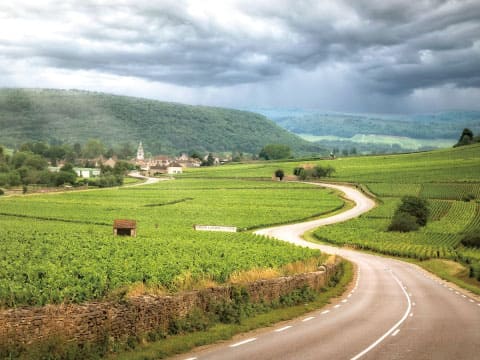
“Protected Designation of Origin” (PDO) is a legal status granted to products that have earned strong consumer trust thanks to a specific production method or region. Once granted, only products actually made in that specific place, using that specific method, are allowed to use the associated place name—whether that’s a city, region, or country.
Because these products already carry strong consumer trust, the system exists to prevent anyone from freely borrowing that name, effectively branding and protecting it as something distinct.
The framework was first established in 1992, with regulations covering agricultural food products introduced in 2006 and wine-specific rules following in 2008. Labeling became mandatory the following year, in 2009.
Requirements
Protected Designation of Origin( PDO )
- The product’s quality or characteristics must be essentially—or entirely—the result of its specific geographical environment (meaning both the region’s natural conditions and the traditional human know-how passed down there).
- Every stage of production, processing, and preparation must take place within that specific region.
PDO status is common among cheeses, salami, cured hams, and vegetables. Well-known examples include Italy’s Prosciutto di Parma, Italy’s Gorgonzola (a blue-veined cheese), France’s Camembert de Normandie, and Spain’s Jamón Ibérico de Guijuelo.
In the world of alcohol, PDO is used mainly for wine. Names like Burgundy and Bordeaux are two of the most familiar examples. Champagne, the sparkling wine, gets its name from France’s Champagne region in the same way, and tequila can only be called “tequila” if it’s produced in one of five designated Mexican states: Jalisco, Guanajuato, Nayarit, Tamaulipas, and Michoacán.
Two related systems—Protected Geographical Indication (PGI) and Traditional Speciality Guaranteed (TSG)—each have their own criteria, and together these frameworks help preserve traditional techniques and production methods.
Protected Geographical Indication( PGI )
- The product must be produced in the country or region named in its title.
- At least one stage of production, processing, or preparation must take place in that specific region.
- The product’s name must be tied to that specific region or method, and its characteristics must be traceable back to that name or place.
PDO status is common among cheeses, salami, cured hams, and vegetables. Well-known examples include Italy’s Prosciutto di Parma, Italy’s Gorgonzola (a blue-veined cheese), France’s Camembert de Normandie, and Spain’s Jamón Ibérico de Guijuelo.
In the world of alcohol, PDO is used mainly for wine. Names like Burgundy and Bordeaux are two of the most familiar examples. Champagne, the sparkling wine, gets its name from France’s Champagne region in the same way, and tequila can only be called “tequila” if it’s produced in one of five designated Mexican states: Jalisco, Guanajuato, Nayarit, Tamaulipas, and Michoacán.
Two related systems—Protected Geographical Indication (PGI) and Traditional Speciality Guaranteed (TSG)—each have their own criteria, and together these frameworks help preserve traditional techniques and production methods.
PGI Requirements
- The product must be produced in the country or region named in its title.
- At least one stage of production, processing, or preparation must take place in that specific region.
- The product’s name must be tied to that specific region or method, and its characteristics must be traceable back to that name or place.
PGI is generally considered a somewhat looser standard than PDO.
Traditional Speciality Guaranteed ( TSG )
- The product must be defined by traditional ingredients, methods of production, or composition.
- Its production process must reflect traditional methods of manufacturing, processing, or both.
Unlike PDO and PGI, TSG doesn’t tie a product to a specific region or environment—it exists mainly to protect traditional ingredients and techniques.
Conquistadors

Photo: Francisco Pizarro (left) and Hernán Cortés (center) | Image via Wikipedia
“Conquistador” is Spanish for “conqueror.” The term is used mainly to describe the Spanish soldiers and adventurers who conquered the Americas between the 15th and 17th centuries.
Under the banner of spreading Christianity, Spanish forces used brutal tactics—including massacres—and exploited rivalries between indigenous tribes to weaken native resistance as they pushed their conquest forward. The result was a catastrophic collapse in the population of Latin America, while the gold and other riches discovered on the continent flowed back to enrich Spain.
The two most famous conquistadors are Hernán Cortés, who conquered the Aztec Empire in what is now Mexico, and Francisco Pizarro, who brought down the Inca Empire in South America.
By this era, most of the Americas had fallen under Spanish invasion and colonization. In terms of drinking culture, this period marked the collision of European—specifically Spanish—drinking traditions with the existing drink cultures of the Americas, a fusion that gave rise to a wide range of new spirits and cocktails.
Phylloxera

Photo: Phylloxera, the grape root louse | Image via Wikipedia
Starting around the 1860s, a devastating vineyard epidemic swept through Europe caused by phylloxera, a tiny insect also known as the grape root louse.
Both the adult and larval forms of phylloxera feed on sap from the roots and leaves of grapevines. Wherever they feed, galls form on the affected tissue, disrupting flowering, causing seedless or malformed grapes, scorching leaves, and stunting the vine’s growth—eventually weakening it to the point of death.
Around 1862, a wine merchant in southern France imported grapevine cuttings from New York and planted them in his own vineyard. Two years later, the surrounding vines began dying off, and the outbreak spread rapidly across all of France and into Spain, Italy, Germany, Portugal, and Austria.
Because the pest attacked the roots, spraying pesticides had little effect. Growers tried and failed with one solution after another, until 1874, when it was finally discovered that European grape varieties could be grafted onto resistant American rootstock—bringing the crisis to an end.
It took roughly 30 years to find a working solution. During the devastation, London gentlemen reportedly turned to whisky in place of brandy, and whisky went on to gain popularity across Europe—one of several turning points that helped whisky become a spirit enjoyed worldwide.
Saccharification

The process of breaking down starch into fermentable sugar is called “saccharification.”
When making alcohol, yeast is given sugar to consume so it can produce ethanol. For this step to work, the sugar first needs to be in a form yeast can actually use.
Sugars fall into three categories: monosaccharides, disaccharides, and polysaccharides. Grapes, the main ingredient in wine, contain sugar mostly as monosaccharides (glucose and fructose); sucrose and maltose are disaccharides; and grains like rice and barley store their sugar as starch, a polysaccharide. Yeast can consume monosaccharides and disaccharides directly (simple fermentation), but it can’t process polysaccharides on its own.
For polysaccharides, the starch first needs to be broken down into monosaccharides or disaccharides before yeast is introduced to carry out alcoholic fermentation (this two-step process is known as multiple fermentation).
Birch

Birch is a deciduous, broadleaf tree found mainly across temperate to subarctic regions of the Northern Hemisphere.
Its name comes straight from its appearance—bark that’s white. In Japan, it grows wild especially throughout Hokkaido.
Birch has a wide range of uses. It’s hardy enough to grow in poor soil, so it’s often planted for rapid reforestation. Its bark is naturally waterproof, which has made it a traditional roofing material in parts of Europe, and its striking white bark is also prized for its looks—used to line the walls and railings of mountain cabins. Because the wood contains a good amount of natural oil, it’s long been used for torches as well. Closer to everyday life, birch wood is also what most ice cream sticks and toothpicks are made from.
In the world of spirits, birch plays a key role in vodka production. Birch wood is charred into charcoal and used as a filtration medium, and this step is exactly what gives vodka its signature clarity, setting it apart from other spirits.
Peat

Peat is the fuel traditionally burned to dry malted barley. It forms over thousands of years as plant matter dies, builds up, and compresses into a dense, carbon-rich material—and it’s this peat that gives Scotch its signature “peaty” character.
Drying malt with peat alone would produce an overpoweringly smoky flavor, so each distillery uses its own approach, varying the amount of peat and when it’s introduced during the process—differences that help shape each distillery’s individual character.
In Scotland and Ireland, the peat used for this comes largely from bogs made up of decayed heather and other moorland vegetation. Peat matters so much to a whisky’s identity that some distilleries even own their own peat bogs.
Hurricane Lamp
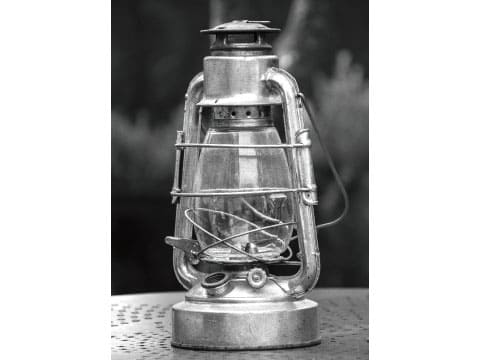
The exact origins of the hurricane lamp (also called a storm lantern) are hard to pin down, but hurricane lanterns had already been developed and refined well before the turn of the 20th century, with major design advances taking shape between the 1850s and 1880s.
Thanks to how practical it was, the design spread quickly across Europe, and people adapted it for all kinds of uses—mounted on outside walls, lighting stairwells and hallways, or carried like a flashlight. It also proved invaluable at sea, and its reputation as “a lamp that won’t blow out even in a storm” is how it earned the name hurricane lamp, or storm lantern.
In the world of drinks, there’s a glass called the “hurricane glass“—a goblet-style glass often used for tropical cocktails—which gets its name from its resemblance to the shape of a hurricane lamp.
Esters

Esters are compounds formed when alcohol reacts with organic acids (fatty acids) during fermentation. They’re responsible for creating the complex, sweet, and floral notes reminiscent of fruit and flowers, and they play a major role in giving spirits like whisky and shochu their individual character and identity.
Characteristics of Esters
- Aroma and flavor — Many esters carry distinct fruity aromas and flavors, which is why they’re widely used in food and perfumery. Isoamyl acetate, for instance, smells like banana, while ethyl butyrate carries a pineapple-like note.
- Use as solvents — Esters also serve as organic solvents, used in manufacturing paints, coatings, and adhesives.
- Biological role — In living organisms, esters play an important role in metabolism, appearing in the form of fats and oils.
Esters in Alcohol
Esters have a major influence on the aroma and flavor of alcoholic beverages. In fermented drinks like whisky, rum, and beer, esters create fruity and floral aromas that help define each drink’s individual character. Because esters form as yeast breaks down sugar during fermentation, the type and amount produced varies depending on fermentation conditions and the specific yeast strain used.
In Short
Esters are organic compounds formed from carboxylic acids and alcohol, with uses spanning flavorings, solvents, and food additives. In alcoholic beverages especially, they play a key role in shaping aroma and flavor, with their formation shaped by fermentation conditions and yeast selection.
The Industrial Revolution

Photo: Crowds gather to see the world’s first railway | Image via Wikipedia
The Industrial Revolution refers to the sweeping wave of industrial transformation that took place from the mid-18th century through the 19th century. It began with major advances in textile manufacturing, but arguably the biggest shift of all was the switch to coal as an energy source.
Coal power sped up factory production, and it allowed steam-powered paddle ships to travel reliably along coastal routes without depending on the wind. On land, the arrival of steam locomotives transformed how ordinary people traveled and how heavy goods and raw materials were transported.
Tools and materials once made from other substances shifted increasingly to iron, and travel became faster and more reliable over much greater distances than before. This didn’t just reshape everyday life—it drove a dramatic rise in GDP, and the nations that adopted these innovations early saw remarkably rapid economic growth, quickly building up their national strength in the process.
The Age of Discovery

The Age of Discovery refers to the period roughly from the mid-15th century to the mid-17th century, when European powers—Spain and Portugal chief among them—expanded into the Americas, Asia, and Africa through exploration and colonization.
As shipbuilding technology advanced, ships were able to travel farther across the ocean, and trade between European nations flourished as a result. Spirits and drink-making ingredients that had once stayed within a single country’s borders began making their way to markets around the world.
This era went well beyond trade alone—European powers colonized parts of Africa and Asia, bringing crops and raw materials back to Europe. It wasn’t just alcohol that changed dramatically during this period; nearly everything did.
Milkshake
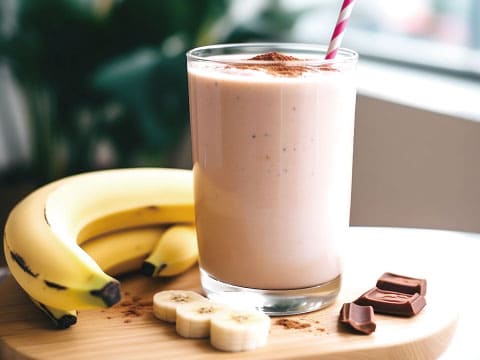
The milkshake is a cold dairy drink that emerged in America in the early 20th century, typically made from milk, coconut milk, almond milk, ice cream, various syrups, fruit, and caramel or chocolate sauce.
When the word “milkshake” first appeared in print in 1885, it actually referred to a whiskey-based, eggnog-style cocktail—not the dessert drink we know today. Back then, it was more of a tonic believed to boost health and vitality than a sweet treat.
By the early 1900s, the drink had shifted toward flavors like chocolate, strawberry, and vanilla. Then, with the invention of the electric blender in 1922 and its growing popularity afterward, the milkshake evolved into the dessert-style drink we recognize now.
Over time, two distinct styles emerged: the “French style,” made with milk, egg yolks, sugar, and vanilla extract, and the “American style,” made with milk, ice cream, and fruit or chocolate syrup. In Japan, meanwhile, Tsuruchan—Kyushu’s oldest café, located in Nagasaki—created its own sherbet-like version by blending egg, condensed milk, sugar, and shaved ice. From there, the milkshake took on countless free-form variations, becoming a beloved drink not just in Japan, but around the world.
Peated Scotch

- What is peat? — Peat is a dense, muddy layer of carbonized organic matter formed over centuries as heather, ferns, moss, and other plants decompose and compress underground. It’s said that just 15 centimeters of peat can take around 1,000 years to form, and Scotland’s cold, boggy landscape happens to be especially rich in it.
- Production and phenol levels — When making whisky, peat is burned to dry germinated barley, and the resulting smoke infuses the malt with phenolic compounds—the source of that distinctive smoky character. This smokiness is measured in “phenol parts per million” (PPM): roughly 10 PPM or below is considered lightly peated, around 25 PPM is medium, and 40 PPM or above is heavily peated.
- Region and iconic bottles — The spiritual home of peated Scotch is Islay, a small island off Scotland’s west coast, currently home to around 10 working distilleries. Here are some of its best-known expressions:
| Whisky | Phenol Level | Character |
|---|---|---|
| Bowmore | ~20-25 PPM | A balanced mix of smoke and elegance, a good starting point for beginners |
| Laphroaig | ~40-45 PPM | Coastal, iodine-like notes alongside a hint of vanilla sweetness—a world-famous classic |
| Ardbeg | ~50-55 PPM | Intensely medicinal, with citrus sweetness hiding beneath—often seen as Islay’s flagship powerhouse |
| Octomore | 130-300+ PPM | The most heavily peated whisky in the world, in a category of its own |
How to enjoy peated Scotch
Beginners should start with lower-phenol bottles like Bowmore before working up to Laphroaig and Ardbeg. Drinking it neat, on the rocks, or with a splash of water (“twice up”) helps open up the aroma, revealing hints of sweetness and fruit hiding beneath the smoke. Mixed into a highball, it becomes a lighter, more approachable, refreshing drink.
Hacienda

A hacienda was a vast, self-sufficient estate that emerged during the Spanish colonial era in the Americas, particularly across Mexico. The word comes from the Spanish verb hacer, meaning “to make” or “to do”—a fitting name, since these estates functioned as small, largely self-contained economies unto themselves.
The system took root in the early 1500s, when the Spanish crown granted vast tracts of land to conquistadors and colonial settlers as rewards for their conquests. What began as land grants soon grew into permanent estates, each built around a main residence, along with barns, workshops, chapels, and worker housing—all organized to produce goods for both regional trade and export back to Spain. Much like the feudal manors of Europe, haciendas relied on a strict hierarchy: the hacendado (landowner) sat at the top, while indigenous laborers, often trapped by debt in a system known as peonage, worked the land below.
What a hacienda produced depended heavily on its region. Some raised cattle across the vast plains of northern Mexico; others grew sugar in Morelos or henequen (a fiber crop) in the Yucatán. In the state of Jalisco, hacienda estates turned to a very different crop: blue agave, the plant at the heart of tequila. These agave haciendas cultivated the fields and distilled the spirit on-site, laying the foundation for what would become Mexico’s most iconic export. In fact, the historic agave fields and hacienda-style distilleries of the Tequila region were recognized in 2006 as a UNESCO World Heritage Site for their role in shaping this 18th-century industry.
The hacienda system began unraveling in the early 20th century, as the Mexican Revolution and subsequent land reforms broke up many of these vast estates and redistributed the land. Today, while the plantation system itself is history, many former haciendas live on—restored as boutique hotels, museums, and event venues, and some tequila producers still bottle their spirits under the hacienda name, evoking that same legacy of sprawling agave fields and traditional craftsmanship.
Malaria
What Is Malaria ?

Malaria is an infectious disease caused by Plasmodium, a parasite spread through the bite of infected Anopheles mosquitoes. It multiplies in the liver and blood, causing fever, chills, and body aches that can turn fatal without treatment. It remains a major global health threat today, especially across tropical regions.
The disease has plagued humans since antiquity, but its cause stayed a mystery for centuries—early theories blamed “bad air,” which is actually where the word “malaria” comes from (Italian mal aria). It wasn’t until 1880 that French physician Alphonse Laveran identified the parasite, and 1897 that British doctor Ronald Ross, working in India, proved mosquitoes spread it—work that earned him a Nobel Prize.
Malaria’s Surprising Link to Cocktails
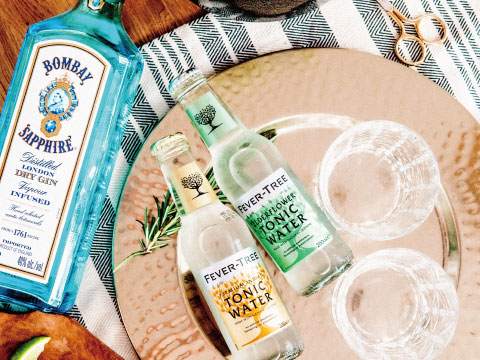
In the 1600s, Spanish colonists in Peru learned from indigenous Andean communities that cinchona bark relieved fever. Its active compound, quinine, proved genuinely effective against malaria and became essential as the British pushed into malaria-ridden India. But quinine was bitterly unpalatable, so colonists began mixing it with soda water and sugar—creating tonic water. To mask the remaining bitterness, they added gin, giving rise to the gin and tonic. What began as a way to choke down medicine became one of the world’s favorite cocktails, one Churchill reportedly joked “saved more Englishmen’s lives, and minds, than all the doctors in the Empire.”
Smoked Cocktails

While infusing food and drink with smoke is an age-old preservation technique, smoking cocktails themselves is a distinctly modern trend. It’s widely traced to 2007, when New York bartender Eben Freeman created a smoked Coca-Cola and bourbon drink that helped popularize the technique across the cocktail world.
Today, bartenders use tools like smoking guns, cedar planks, or glass cloches to infuse drinks with aromatic wood smoke—applewood, hickory, cherrywood, and oak are all popular choices, each lending a distinct character. The smoke can be applied directly to the finished drink, used to flavor syrups and ice in advance, or simply used to scent the glass before pouring. Beyond flavor, smoked cocktails deliver a theatrical, sensory experience, engaging the nose before the first sip—a favorite twist on classics like the Old Fashioned.
Salt Rim

Coating the rim of a glass with salt is one of the most recognizable finishing touches in cocktail-making, best known from the Margarita and the Salty Dog. The technique works by moistening the rim—typically with a lemon or lime wedge—then rolling it in salt, letting drinkers taste a hint of salinity with every sip. In Japan, this style of decorating a glass is known by the homegrown term “snow style,” a nod to its snow-dusted appearance, though in English it’s simply called a salted rim, or sometimes “frosting” in bartending circles.
While salt is the classic choice, sugar rims are just as common on drinks like the Sidecar, and creative bars increasingly experiment with spiced, herbed, or flavored salts to complement specific cocktails. Beyond taste, a rimmed glass adds a distinctive visual flourish that signals exactly what kind of drink is coming.
Oak

Oak has been used to store and transport liquids for thousands of years, but its role transformed dramatically once distillers and winemakers realized the wood didn’t just hold their spirits—it actively shaped their flavor. As the wood interacts with alcohol over time, it releases compounds like vanillin, tannins, and lactones, contributing notes of vanilla, coconut, caramel, and spice while softening harsh edges through slow oxidation.
Two types dominate the spirits world: American oak, with its looser grain and bold vanilla and coconut character, and French oak, tighter-grained and known for subtler, more elegant flavors. U.S. law famously requires bourbon to be aged in new, charred American oak barrels, while many whiskies and wines instead use previously used barrels—including ones that once held sherry or port—to pick up even more complex, layered flavors. From Scotch to rum to cognac, oak remains the single most influential ingredient behind how a spirit ultimately tastes.


