

Order a Gin and Tonic today and it feels like pure pleasure — it wasn’t built for that. This drink began as medicine in British India, where bitter anti-malarial quinine was cut with sugar and soda just to make it drinkable, and gin joined the mix almost by accident. Two ingredients, endless variation: pour it tonic-heavy and gin vanishes, pour it gin-heavy and it turns into a Martini in disguise. Get the ratio and the gin right, and a former medicine becomes the easiest classic to fall in love with tonight.
Recipe
Ingredients

Recipe no.022
- Dry gin — 1 + 1/2 oz (45ml)
- Tonic water — Full
- Lime wedge
- Note: “Full” means filling the glass to about 80–90% capacity.
18 Recommended Dry Gin Brand
6 Recommended Tonic water Brand
Instructions

Prepare 1/8 of a lime.
Chill the tonic water and glass beforehand.
Give the lime wedge a light squeeze into the glass, then add ice and the dry gin.
Pour in the tonic water gently to avoid excess foam, then stir slowly and lightly.
When mixing in a carbonated ingredient, one to two slow rotations while lifting and lowering the ice is all it takes to combine everything.
・Technique | Stir
・Glass | Collins glass / Tumbler glass
・ABV | Roughly 9–10%
・Best Enjoyed | Daytime / Before dinner
Gin and Tonic in Detail, with Recipe Video
Origins

Photo | Genever
It’s easy to assume the Gin and Tonic was invented for pleasure — it wasn’t. This drink started as medicine in British-controlled India. Quinine, used to prevent malaria, was bitter, and residents cut it with sugar and soda water to get it down. Gin, tied to Dutch genever and already popular medicinally, joined in, striking a balance that outlasted its purpose.
Carbonated water spread widely in the late 1700s, and in 1858 businessman Erasmus Bond patented the first commercial quinine tonic water. By 1870, Schweppes launched its own Indian Quinine Tonic for expatriates needing daily quinine. An 1868 Indian magazine holds one of the earliest references to gin paired with tonic, and by 1880 the pairing was popular locally.
The drink’s lime habit traces to a separate naval tradition — sailors carried lime rations to prevent scurvy, and that squeeze became part of the recipe. After World War II it spread worldwide, and Schweppes building a U.S. plant in 1953 cemented it as a modern classic.
Flavor & Character
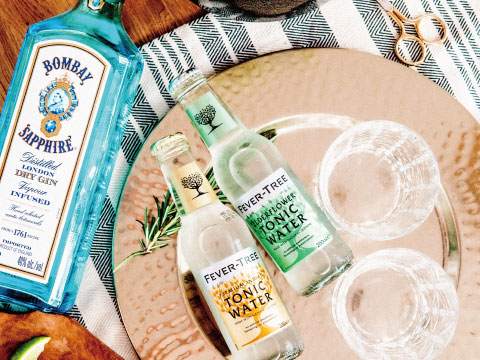
The Gin and Tonic is deceptively simple: two ingredients, endless variation in how they’re balanced. Tonic’s quinine bitterness meets gin’s botanical character head-on, and the ratio between them is what actually defines the drink — pour it too tonic-heavy and gin’s botanicals disappear, too gin-heavy and it drinks more like a martini than a long drink.
The first sip brings tonic’s crisp bitterness and carbonation forward, followed by gin’s juniper and citrus botanicals unfolding underneath. A lime wedge, squeezed rather than just dropped in, adds real acidity that keeps the bitterness from feeling flat.
Different gins genuinely change the drink: a classic London Dry leans piney and sharp, while a more citrus-forward gin softens the whole thing considerably. I always tell people the gin matters more here than in almost any other cocktail, since there is nowhere for it to hide.
Points, Twists & Food Pairings

- Best Pairings・・・Pair with olives, smoked salmon, or salty nuts — juniper loves briny, savory bites.
- Mixing Tip・・・Pour gin over ice first, then add tonic gently down the side to keep the chill and fizz.
- Easy Twist・・・Swap lime for grapefruit or cucumber, or try a flavored tonic for a botanical twist.
- Drinking Note・・・It sips easy, but gin runs strong — pace yourself with a heavy pour before dinner.
Recipe Video
- Recipe Video | BAR.Channel Channel Home
Gin and Tonic Recipe: The Easy 2-Ingredient Classic Cocktail

A simple, classic cocktail that balances dry gin's crisp aroma with tonic water's gentle bitterness — refreshing, easy to make, and ready in minutes.
タイプ: Cocktail
料理: British
キーワード: gin and tonic, dry gin cocktail, tonic water cocktail, classic gin drink
レシピー歩留まり: 1 drink
カロリー: 115 kcal
準備時間: PT3M
所要時間: PT3M
レシピー材料:
- Dry gin - 1 1/2 oz (45ml)
- Tonic water - Full (fill glass 80-90%)
- Lime wedge
レシピーの説明:
Prepare:
- Prepare 1/8 of a lime. Chill the tonic water and glass beforehand.
Combine the ingredients:
- Give the lime wedge a light squeeze into the glass, then add ice and the dry gin.
Stir in the tonic:
- Pour in the tonic water gently to avoid excess foam, then stir slowly and lightly — 1 to 2 rotations is enough.


