

Order a Gin and Tonic and you’re drinking a small piece of medical history without knowing it — quinine, bitter enough that people once mixed it with sugar and wine just to choke it down, is the reason tonic tastes the way it does. Every glass hides a story like this: juniper is the one berry every gin must legally contain, gyokuro’s shade-grown leaves trade bitterness for umami, angelica’s seeds carry a legend about an archangel. This glossary unpacks them all. Pour something tonight, and read the ingredients while you drink.
Essence

An essence is an extract, oil, or similar compound drawn from plants, animals, or other natural sources. More specifically, it refers to an extract, essential oil, or flavoring compound that’s been made water-soluble.
Many extracts, oils, and flavoring compounds don’t dissolve easily in water on their own. To make them practical to use, they’re typically dissolved in ethanol first, which helps them blend smoothly into water-based mixtures—and that’s what we call an essence.
Vanilla essence is probably the best-known example. Fruit- or herb-infused liqueurs, when used to add aroma and flavor to cooking, can also be considered a type of essence in their own right.
Flavor
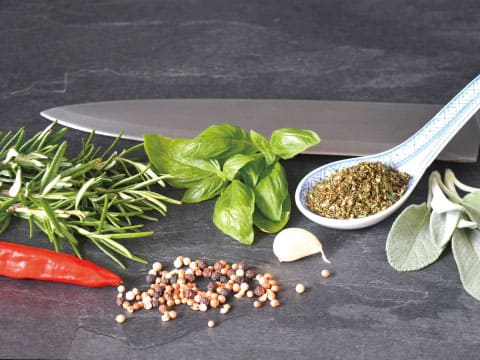
Flavor refers to the overall sensory experience of food or drink when eaten or consumed — a blend of aroma, taste, texture, and even temperature that the brain combines into a single impression. Aroma actually plays the biggest role in this: much of what we perceive as “taste” actually comes from smell, which is why food can taste bland when a stuffy nose blocks the sense of smell. When referring specifically to compounds added to enhance or create flavor — whether natural extracts or artificial compounds — the term “flavoring” is used instead.
Quinine

Photo: Cinchona bark | Image via Wikipedia
Quinine is the refined active compound extracted from the bark of the cinchona tree, a plant native to South America.
Andean peoples had long used cinchona bark to treat fever and chills, and Spanish colonists documented its remarkable fever-reducing effects as early as the 1630s, according to a popular (though historically disputed) legend involving a Spanish countess who was cured of fever while in Peru. From there, the bark made its way to Europe by way of Jesuit missionaries and, as the Age of Discovery gave way to European colonial expansion, became the world’s go-to remedy against malaria. Its importance only grew during World War II, when Japan’s occupation of Java — then the world’s largest source of cinchona — cut off Allied supplies and triggered a global quinine shortage, spurring urgent efforts to find natural and synthetic alternatives.
Cinchona bark was also known to settle the stomach and act as a general tonic, which led to its use in medicinal wines and liqueurs as well.
But this seemingly miraculous bark came with one major drawback: it was intensely bitter. People tried everything to make it more bearable — mixing in sugar, blending it into medicinal wine — and today, that same battle against bitterness lives on in tonic water, still one of the most popular ways to enjoy this legacy.
Juniper Berries

Juniper berries are the cones produced by the common juniper, a coniferous evergreen. It’s a widespread species found throughout the cooler regions of the Northern Hemisphere, so it’s not an especially rare sight.
While they look a lot like blueberries in photos, their aroma and flavor couldn’t be more different—less like a fruit and more like the plant’s own natural fragrance. Taste one, and a distinctly herbal, piney flavor fills your mouth.
Juniper berries are the one ingredient every gin is required to contain, and it’s the aroma from these berries that gives gin its signature character. Because of that fragrance, juniper is also sold as an ornamental herb for houseplants.
Juniper is also brewed as an herbal tea and has traditionally been valued for its diuretic effects and its potential to help lower blood sugar; it was even used in medicinal spirits and tonics in the past. That said, it should be used in moderation—large amounts can be harmful to people with kidney conditions, and it’s not recommended during pregnancy or while breastfeeding.
Botanical and Organic
Botanical

Look up “botanical” in the dictionary, and you’ll find definitions like “relating to plants” or “plant-based.” What it actually means shifts depending on context. In beauty products like shampoo and cosmetics, “botanical” typically refers to plant-derived ingredients. In fashion, it usually describes floral patterns instead.
In the world of spirits, the meaning leans closer to the beauty-industry sense. Gin is the classic example — you’ll often hear it described by its “botanicals,” referring to the plants used during production to give the spirit its aroma and flavor.
Organic

Look up “organic,” and the dictionary points you toward “organically grown” or “organic farming.” This refers to a method of growing, producing, and processing food using natural resources — sunlight, water, soil, and living organisms — without synthetic pesticides or chemical fertilizers.
This approach benefits not just human health, but plants, animals, and microorganisms as well, though it comes at the cost of far more time and labor to produce.
The Difference Between “Botanical” and “Organic”
These two words might sound similar, but they mean very different things:
- Botanical refers to something plant-based or plant-derived, and can also describe a floral pattern. It doesn’t imply anything about pesticide use, organic farming, or being “natural” in a regulatory sense.
- Organic specifically refers to products grown without pesticides through organic farming methods. In Japan, any product sold as “organic” must be certified by an accredited body and carry the official JAS (Japanese Agricultural Standards) seal.
Citrus

“Citrus” refers broadly to fruits from the genus Citrus in the Rutaceae family, believed to have originated across regions like eastern India, China, and Myanmar.
To break it down a bit further: mandarin varieties include satsuma, ponkan, kishu mikan, and sakurajima mikan; orange varieties include navel, Valencia, and blood orange; sour/aromatic citrus includes lemon, lime, yuzu, sudachi, kabosu, shikuwasa, and citron; and hybrid citrus includes natsumikan, hassaku, and dekopon. Beyond these, the citrus family also includes grapefruit, iyokan, pomelo, murcott, seminole, agli fruit, and trifoliate orange, among others.
Citrus fruits contain compounds like synephrine and other alkaloids, and some studies have looked at whether these compounds might stimulate adrenergic receptors in fat cells to help break down stored fat. That said, the research on this is genuinely mixed — while some small studies suggest a modest effect on metabolism, larger reviews have found little solid evidence that these compounds meaningfully support weight loss on their own, so it’s best not to treat citrus as a shortcut for dieting.
Where citrus reliably shines is in aromatherapy — its scent is widely valued for its calming, mood-lifting effect, which is why citrus essential oils are a staple in the field.
Gyokuro

Gyokuro is a type of Japanese green tea grown using a distinctive method: just as the new spring buds begin to open, the tea bushes are covered with woven straw mats to block direct sunlight for around 20 days before harvest.
This shading limits photosynthesis, which in turn suppresses the production of catechins — the compounds responsible for astringency — resulting in a tea with less bitterness and a much stronger sense of umami.
The result is a green tea with softened bitterness, a gentle sweetness, and a deep, rich umami flavor — everything you’d want in a top-tier cup of Japanese tea.
Because it’s so labor-intensive and costly to produce, only a handful of regions grow it today, making gyokuro a rare and prized tea compared to other varieties.
The name “gyokuro” traces back to 1835, when Yamamoto Kahei VI — the sixth-generation head of the Yamamotoyama tea company — was just 18 years old and working at a tea-processing site in Uji’s Ogura village. While stirring freshly steamed tea leaves, he noticed that as they dried, they stuck together and curled into small, pellet-like shapes. When he brewed and tasted them, the tea had an elegant flavor and a sweetness reminiscent of nectar-like dew — inspiring the name “Gyokuro,” meaning “jade dew.”
Sansho

Photo: Sansho tree | Image via Wikipedia
Sansho is a deciduous shrub belonging to the genus Zanthoxylum, part of the citrus and rue family (Rutaceae) — a somewhat surprising classification given how different it looks and tastes from citrus fruit. It grows wild across hills and mountainous areas in Japan, the southern Korean peninsula, and China.
It’s fairly cold-hardy and can be found growing wild even in Japan’s colder regions, but it doesn’t do well in dry conditions or strong direct sunlight, so it tends to thrive in humid environments instead.
The name “sansho” (山椒) comes from combining “san” (山), meaning mountain, with “shō” (椒), a character that carries the meaning of a fragrant, spicy flavor — together giving “mountain spice.” It also goes by a few other names, including yama-sansho and kinome, and in English it’s known as “Japanese pepper.” True to that name, it’s prized as a spice for its sharp, tingling heat paired with a refreshing, cooling quality. Sansho’s fruit, leaves, and flowers each carry their own distinct flavor and aroma.
Mi-Zansho (Sansho Berries)

When people talk about “sansho,” they’re almost always referring to its berries — prized for their distinctive fragrance and sharp, tingling heat.
The berries come in two main forms, harvested at different points in the growing season. The first harvest happens around May, when the berries are still young and tender; these are typically cooked into dishes like tsukudani (simmered in soy sauce) and eaten as they are.
The second harvest, from summer into fall, yields more mature berries that are dried and ground into a fine powder known as “kona-zansho” (powdered sansho).
Photo: Sansho berries | Image via Wikipedia
Hana-Zansho (Sansho Flowers)
Sansho trees are dioecious, meaning individual trees are either male or female. Female trees produce berries after flowering, while male trees never bear fruit at all — and it’s the flower buds from these fruitless male trees that make up hana-zansho.
Compared to the berries, hana-zansho has a much milder heat and a gentler, more delicate aroma.
Photo: Sansho flower | Image via Wikipedia

Ha-Zansho (Sansho Leaves)

The young leaves of the sansho plant are known as “ha-zansho,” harvested in spring and often sold under the name “kinome.”
They’re prized for their refreshing, fragrant aroma, with almost none of the sharp heat found in the berries.
Photo: Sansho leaves | Image via Wikipedia
Yuzu

Photo: Yuzu tree | Image via Wikipedia
Yuzu is a citrus fruit belonging to the Citrus genus within the Rutaceae family, also sometimes called “hon-yuzu” (true yuzu).
The fruit originated in China, along the upper reaches of the Yangtze River, and historical records suggest it reached Japan by way of Korea sometime before the Nara period (710–794)—making it one of the oldest cultivated citrus fruits in the country, with a documented history stretching back roughly 1,300 years.
Over the centuries, yuzu has gone by several old Japanese names and characters, including 柚, 由, and 柚仔, along with older readings like “izu” and “yunosu.”
Today, Japan is both the world’s largest producer and consumer of yuzu. Because of its intensely tart flavor, it’s typically the peel—not the flesh—that gets used, prized for the fragrance it adds to dishes. While yuzu is grown throughout Japan, the two leading production regions are Kochi and Tokushima, both on the island of Shikoku.
The tree can grow up to around 4 meters tall, with vigorous, upright growth. It’s the most cold-hardy of all citrus species, thriving even as far north as Japan’s Tohoku region, and its natural resistance to common citrus diseases like scab and canker means it can often be grown without pesticides, making organic cultivation relatively straightforward.
Yuzu trees flower in early summer before setting fruit. The unripe fruit, called “ao-yuzu” (green yuzu), is harvested around July and August while still lime-green in color, while the fully ripened “ki-yuzu” (yellow yuzu) is harvested around November.
Vanilla

Photo: Vanilla flower
Vanilla refers to an evergreen plant in the orchid family, genus Vanilla, as well as the flavoring extracted from it. The word “vanilla” comes from Spanish “vainilla,” meaning “little pod” or “little sheath” — a nod to the pod-like shape of the fruit — which in turn traces back to the Latin word for “sheath.”
Vanilla originates mainly from Central and South America, including Mexico, Guatemala, Brazil, Paraguay, and Indonesia, and it’s now cultivated in Japan as well.
Its history dates back to pre-Columbian Mesoamerica, where it was used to flavor tobacco and cacao drinks long before the Spanish arrived. Spanish colonists brought it back to Europe, spreading its use across the continent.
For a long time, vanilla cultivated by Mexico’s Totonac people remained the finest in the world — that is, until the mid-19th century, when a French plantation worker discovered a technique for hand-pollinating the flowers, a method that combined with the Totonac’s own traditional bean-processing knowledge to make large-scale vanilla farming possible outside Mexico.

Vanilla flavoring generally comes in three forms: vanilla essence, vanilla oil, and vanilla beans.
Vanilla essence and vanilla oil are both made by extracting the plant’s flavor compounds and dissolving them in a solvent, and they’re most commonly used to flavor cakes and ice cream. Vanilla beans — despite the name, this actually refers to the whole seed pod, not just the seeds inside — only develop their signature aroma after going through the curing process, which is why they command a much higher price.
Those tiny black flecks you sometimes see in premium puddings and other desserts come from real vanilla beans, giving the dish a rich, sweet aroma and an elegant depth of flavor.
Photo: Cured vanilla beans
Cinnamon

Cinnamon is a spice harvested from the inner bark of several trees in the genus Cinnamomum, often called the world’s oldest spice. Along with pepper, nutmeg, and clove, it’s considered one of the world’s four great spices.
True cinnamon is native to Sri Lanka, India, Bangladesh, and Myanmar. There’s a popular legend that cinnamon was carried from China to ancient Egypt, but this is generally believed to be a case of mistaken identity — what those ancient traders were actually describing was likely cassia, a closely related spice with a similar look and flavor, native to China.

The cinnamon tree is an evergreen known for its thick bark, and it’s this bark—along with the leaves—that’s harvested to produce the spice. Growers cut the thick main stem down near ground level, then strip away the outer bark from the harvested stems and evenly beat the branches to loosen the inner layer.
The inner bark, only about half a millimeter thick, is then peeled away in long rolls, dried, and cut down to size before shipping — the process that gives cinnamon the familiar curled stick shape everyone recognizes.
Thanks to its unmistakable aroma and flavor, cinnamon is used across an enormous range of foods and drinks — meat dishes, desserts, beverages, and even as an ingredient in spirits. In Japan, it’s been used since the Edo period, and its most famous application is yatsuhashi, the cinnamon-flavored Kyoto confection.
Photo: Cinnamon tree leaves | Image via Wikipedia
Nutmeg

Nutmeg refers to the tree in the genus Myristica, or to the spice made by grinding its seeds into powder.
The nutmeg tree is a dark-leaved evergreen, and remarkably, it produces two distinct spices from a single fruit: mace, made from the lacy covering around the seed, and nutmeg itself, made from the seed inside.
Because it’s used so widely, nutmeg is grouped alongside cinnamon, pepper, and clove as one of the world’s four great spices.
Today, the most important commercial source is Indonesia’s Moluccas—often called the “Spice Islands” for their role in producing so many prized spices—along with other growing regions like Malaysia and the Caribbean. The name “nutmeg” comes from a combination of “nut” and “musk,” reflecting its musky-scented, nut-like character. (Musk, for reference, is a natural animal-derived fragrance traditionally obtained from musk deer.)
The earliest known evidence of nutmeg use dates back roughly 3,500 years, discovered as residue on ancient pottery fragments in Indonesia’s Banda Islands. From there, knowledge of the spice gradually spread outward along ancient trade networks, eventually reaching traders and markets across Asia, the Middle East, and later Europe.
Today, nutmeg is a familiar spice found in kitchens everywhere. It pairs beautifully with meat, vegetables, and dairy-based dishes, and it’s just as at home in cakes and cookies, as an ingredient in spirits, or as a finishing touch sprinkled over drinks.
Sugarcane

Sugarcane is a plant in the Saccharum genus of the grass family (Poaceae), and it’s the primary raw material behind most of the world’s sugar. Brazil is the world’s top producer today, while in Japan, Okinawa Prefecture leads production by far. The plant thrives in subtropical climates, with tough, bamboo-like stalks that can grow as tall as 3 meters. Its leaves resemble corn leaves in width, and in autumn, feathery, pampas-grass-like plumes emerge from the top of the stalks.
Sugarcane is believed to have originated in what is now New Guinea, where it was domesticated around 6000 BCE before spreading to what’s now India and Southeast Asia. Some sources point to India as the true birthplace of the plant, and it’s widely believed that the technique for refining sugar itself first developed in northern India.
Beyond sugar production, sugarcane juice is also enjoyed as a drink — either pressed and consumed straight or blended into beverages. It’s especially popular across Southeast Asia and India, often served chilled with a splash of citrus like lemon as a refreshing drink. (The author has tried freshly pressed sugarcane juice in Okinawa, and remembers it being intensely sweet with a distinctly grassy, vegetal edge.)
Sugarcane also shows up in cooking. In Vietnam, seafood is sometimes skewered on sugarcane stalks and grilled or fried, while in Sichuan cuisine in China, it’s used in dishes simmered together with fish.
Naturally, sugarcane is also a key ingredient in spirits — most famously rum. Rum is typically made by distilling molasses, the leftover syrup produced as a byproduct of sugar refining.
Rum production, history and recommended brands
Wild Berries (Kiichigo)

“Kiichigo” is a general term for plants in the genus Rubus, in the rose family—mostly deciduous or evergreen shrubs, though some herbaceous and vine-like varieties exist too. The name loosely translates to “tree strawberry,” distinguishing it from ground-growing wild strawberries.
There’s tremendous variety within the group—more than 500 species exist worldwide, with 35 of them cultivated in Japan. Japan actually cultivated its own native lineage of these berries from ancient times through the Muromachi period, but that original strain has since died out; today, all raspberries and blackberries grown in Japan come from stock imported from Europe and North America.
The fruit can be eaten fresh, but it doesn’t keep well, so it’s often sold frozen instead. It’s also commonly used to make jam, juice, and liqueurs.
The dried, unripe fruit of certain varieties—goshoichigo, kumaichigo, and tokkuriichigo—is used in traditional medicine, known as “fukubonshi.” Raspberry leaves are brewed as raspberry leaf tea, while the leaves of a goshoichigo variant are used to make tencha, a sweet herbal tea with a long history in traditional Chinese medicine.
Cassis (Blackcurrant)

Cassis is the fruit of a deciduous shrub in the genus Ribes, part of the currant and gooseberry family, native to temperate regions. The berries are notably rich in vitamin C and anthocyanins.
Its proper name is “blackcurrant” in English, and “kurosuguri” in Japanese. “Cassis” is actually the French word for the same fruit — and thanks to drinks like the “Cassis Orange” cocktail becoming popular at bars, the French name ended up sticking in everyday use more than the native Japanese term.
Blackcurrants are grown mainly in Europe, with Poland as a major center of production — harvesting somewhere between 100,000 and 140,000 tons a year, making it one of the world’s leading suppliers and accounting for roughly half of global commercial output (Russia actually harvests more in total volume, but much of that stays within the domestic market). In Japan, Aomori Prefecture is by far the country’s top producer, harvesting around 10 tons as of 2013 and marketing its crop under the “Aomori Cassis” brand. In the Southern Hemisphere, New Zealand is also known for growing the fruit.
Blackcurrants were once widely cultivated across the United States too, but that changed in the early 1900s, when the fungus responsible for white pine blister rust arrived from Asia by way of Europe. Blackcurrant bushes turned out to be an ideal host for the disease, which went on to devastate America’s native white pine forests — leading the government to ban blackcurrant cultivation outright. Today, regulations vary by state, with some allowing cultivation and others still restricting it, and the fruit remains far less familiar in the U.S. than it is throughout Europe.
Blackcurrants carry a faintly bitter edge alongside their signature sweet-tart flavor. Fresh berries spoil quickly, so they’re rarely sold as fresh produce — instead, they’re typically frozen right after harvest, or turned into purées, jams, baked goods, and spirits.
Agave (Century Plant)

Agave (sometimes spelled “agave” in English as well) is a group of monocot plants traditionally classified in the family Agavaceae, though modern classification places it within the Asparagaceae family, subfamily Agavoideae. The name comes from Greek mythology, tracing back to Agave, a figure known for her “noble” or “admirable” bearing—fitting, given the plant’s striking appearance. In Japanese, it’s called ryuzetsuran, literally “dragon’s tongue orchid.”
It’s worth noting that “century plant” (Agave americana) is just one of more than 100 species within the broader agave genus—the two terms aren’t interchangeable. That said, because true agave plants are relatively uncommon in Japan, “agave” and “century plant” have come to be used almost synonymously there. In Mexico, agave is more commonly known as maguey.

Despite what its Japanese name suggests, agave has nothing to do with orchids. It’s also sometimes confused with aloe due to a similar look, but aloe belongs to an entirely different family (Asphodelaceae), so the two aren’t related either.
Agave grows wild or under cultivation mainly across Mexico, the southern United States, and Central America. Depending on the species, it’s used as an ornamental plant, a food source, a fiber crop, and—most notably for spirits—as the raw material for tequila, extensively cultivated for that purpose in Mexico.
As an agave plant approaches flowering, the starch it has stored for years begins converting into sugar, and this sugar-rich sap flows up through the developing flower stalk. That sap is collected and used to make syrup and similar products.
The agave used to make tequila is mainly Agave tequilana — commonly known as blue agave — which can only be grown under fairly specific conditions: altitudes above roughly 1,500 meters, average temperatures around 20°C, and more than 250 sunny days a year. On top of that, it takes at least six years from planting to harvest, with some plants needing as long as 12 to 14 years — a serious commitment for growers. As the photos show, the plant itself is enormous, with some reaching 70 centimeters to over a meter in diameter and weighing anywhere from 30 to 40 kilograms.
Photo | Trimming the leaves around the agave heart
Tequila production, history, and recommended brands
Pomegranate

The pomegranate is a deciduous tree that can grow up to 6 to 7 meters tall. Its fruit, typically 12 to 15 centimeters across, is packed inside with clusters of jewel-like, ruby-red seeds, widely used in desserts, juices, syrups, and more.
Pomegranates are believed to have originated in the region around present-day Iran, where they’ve been cultivated since ancient times. About 2,000 years ago, they spread to China along the Silk Road, while also making their way westward from Greece across Europe and eventually to the coasts of the Americas. To the east, they spread through Asia into Japan and India.

Pomegranates are thought to have reached Japan during the Heian period, where they were originally grown for ornamental and medicinal purposes rather than as food. The Japanese name “zakuro” is believed to trace back to the Zagros Mountains, located east of the Persian Gulf, with early Chinese traders transliterating the name of that mountain range into the characters now used for the fruit. (An alternate theory ties the name instead to the ancient Persian kingdom of Anxi, describing the fruit’s lumpy, tumor-like shape.)
The fruit itself is roughly the size of an ear of corn, with a similarly firm texture. Its flavor is sweet-tart with a distinctive touch of astringency.
Pomegranates show up in all kinds of foods—yogurt, juice, salads, and more. They’re also nutritionally rich, especially in potassium, and contain polyphenols known for their antioxidant properties, making the fruit a popular choice for supporting overall health and skin condition.
Elderflower

Photo | Elderflower
Elderflower comes from the plant also known as European elder, a deciduous, flowering shrub-to-small-tree in the genus Sambucus, family Adoxaceae (some classifications place it in Viburnaceae).
It’s native mainly to Europe, North Africa, and southwestern Asia, growing anywhere from a shrub-sized plant up to a small tree 3 to 10 meters tall. It blooms with creamy-white flowers in June and July, followed by dark purplish-black berries in autumn. Its scientific name, Sambucus nigra, includes the Latin word nigra, meaning “black”—a nod to the color the berries turn once ripe.
The leaves, stems, and flowers of the elder tree have all been used medicinally, with dried elderflower long recognized as an herbal remedy across many cultures. Traditionally, the leaves were applied externally for bruises and sprains, while the flowers were used to treat colds, allergies, arthritis, and sore throats, and as a gentle laxative.

Today, elderflower is popular in gardens for its delicate, pretty blossoms and its sweet, fruity fragrance often compared to muscat grapes. As a fragrant herb, it’s also widely enjoyed in the form of concentrated liqueurs and syrups, and thanks to its mild, easygoing flavor, it works well in herbal teas and desserts too.
In the cocktail world, elderflower and elderberry are sometimes used as an ingredient in grenadine-style syrups — traditionally made from pomegranate, but occasionally reimagined with elderberry as an alternative fruit base.
Photo | Elderflower syrup
Wormwood
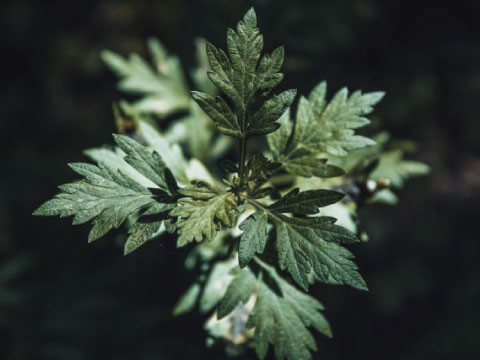
Wormwood is a perennial herb in the daisy family (Asteraceae), known for its intensely strong aroma. Its leaves and stems have traditionally been used as a digestive tonic and as an insect repellent.
It’s also used in soft drinks and is approved as a food additive. Because bitterness is wormwood’s most defining trait, it’s classified as a bittering agent — in the same broad category as caffeine.
Wormwood should be used with caution: consuming large amounts at once can cause symptoms like vomiting and nerve-related effects.
In the world of spirits, wormwood is best known as the key ingredient in absinthe, an herbal liqueur, and it’s also used in vermouth, the aromatized fortified wine. Absinthe is wormwood’s signature spirit, and it exploded in popularity across late-19th-century Europe. That popularity led to a flood of low-quality, cheaply made absinthe on the market, often bottled at 70% ABV or higher. Absinthe eventually developed a reputation for causing hallucinations and addiction — comparisons to cannabis were common at the time — and this led several countries to ban it outright. Modern research, however, has largely debunked those hallucination claims: the compound blamed for it, thujone, is present in far too small a quantity in absinthe to cause any such effect, and the health issues once associated with heavy absinthe drinking were more likely the result of high alcohol content and low-quality adulterants rather than the wormwood itself. Today, with updated production standards and regulated thujone limits, absinthe is legal and sold around the world once again.
Coriander

Photo | Coriander seeds
Coriander is an annual herb in the Coriandrum genus, part of the carrot family (Apiaceae). Its Japanese name is koendoro, while in Thai it’s known as pak chi — the source of its now-common English nickname, “cilantro.”
It’s a spice with deep roots in Thailand, China, and the surrounding region, and more recently it’s become a trendy, distinctively flavored ingredient in Japan as well.
Coriander’s history stretches back more than 3,000 years to ancient Egypt, where it was already being cultivated. The Egyptians called it the “spice of happiness” and placed the seeds in tombs alongside the deceased for their journey into the afterlife. From Egypt, it’s believed to have spread to ancient Rome and eventually China.
Today it’s grown all over the world, with the broader Eurasian continent standing out as a major production region. In Japan, “coriander” and “cilantro” (or pakuchi) are treated as separate names for what is actually the exact same plant — the difference in naming comes down to timing. Coriander reached Japan from China as far back as the Heian period, while cilantro, despite having arrived long ago too, only became widely used much more recently, following its recent surge in popularity. In practice, the ground seed is generally called “coriander,” while the fresh leaf is called “cilantro” or pakuchi.

Coriander seed is harvested once mature, then dried and ground into powder. It has a mild flavor with natural sweetness and a subtle spiciness, pairing well with meat, soups, curries, and countless other dishes as a flavor accent.
Cilantro, the fresh leaf, is the opposite — its flavor is bold and polarizing. It’s sometimes nicknamed “stink bug herb” for its close resemblance to the smell of that insect, and it tends to spark strong love-it-or-hate-it reactions. (Interestingly, that soapy or “buggy” taste some people notice comes down to genetics — certain people are more sensitive to specific aldehyde compounds in the leaf.)
Despite the divisive smell, cilantro is highly nutritious, packed with compounds thought to support immunity and skin health — likely part of why it’s become especially popular among women in recent years.
Coriander shows up in plenty of spirits too. Among spirits, it’s a key botanical in dry gin, and among herbal liqueurs, it’s famously used in Campari, as well as in vermouth, the wormwood-flavored aromatized wine.
Photo | Cilantro
Cardamom

Cardamom is a spice made from the seeds of several perennial plants in the ginger family (Zingiberaceae), belonging mainly to the genera Elettaria and Amomum.
It’s native to, or grows wild across, subtropical Asia — particularly India and Indonesia — though it’s now also cultivated in places like Guatemala in Central America and Tanzania in Africa. The pods are harvested while still firm, then dried; peeling back the outer husk reveals the dark seeds inside.
There are two main types of cardamom: green and black. Green cardamom has an elegant, distinctively refreshing, resinous aroma with a touch of citrus-like brightness. Black cardamom, by contrast, has a more bitter, astringent character, with flavor notes reminiscent of traditional herbal medicine.
Cardamom is often cited as the world’s third most expensive spice, ranking just behind saffron and vanilla. It’s a staple of Indian cuisine and is also brewed into hot drinks like chai throughout South Asia, while in Scandinavian countries such as Denmark and Sweden, it’s a popular flavoring in baked goods.
Caraway

Caraway, formally known as Carum carvi, is a biennial plant in the carrot family (Apiaceae) used as a spice in cuisines around the world.
The name “caraway” is believed to trace back to the Arabic word karawiya. It’s been used as a spice since ancient times and was already being cultivated across medieval Europe. Today it’s a staple ingredient in breads, sausages, soups, cakes, and other baked goods, as well as vegetable dishes like cabbage—an indispensable part of the culinary world.
Beyond the kitchen, essential oil extracted from caraway seeds is believed to support digestion and relieve gas, and it’s also traditionally been used for bronchitis and stomach pain. Historically, it was even used as a love potion.
Caraway has a crisp, refreshing quality with a faint sweetness, and thanks to that freshness, it’s also been used in mouthwash and oral rinses.
Angelica

Angelica, known in Japan as seiyo toki (Western angelica), is a biennial plant in the carrot family (Apiaceae) that typically grows 1 to 2 meters tall. It’s found wild throughout Europe, though it’s especially common in Northern and Eastern Europe.
Thanks to its cold-hardiness, angelica has long been prized as a valuable vegetable in regions with limited plant life, such as Siberia. Its flavor is bittersweet with a strong, aromatic character.
Its wide distribution across Europe today is often credited to the Vikings, who are said to have spread it far beyond its original range.
The name “angelica” comes from the Latin word for “angel.” According to legend, it’s connected to the Archangel Michael, who is said to have appeared in a monk’s dream during a plague outbreak and revealed that this plant could ward off the disease. Because of this, angelica has traditionally been associated with the feast of St. Michael (May 8 on the old calendar), when it was said to bloom, and it’s sometimes known as the “herb of angels.” In medieval Europe, it was consumed as a remedy believed to cure illness.
In practice, angelica’s tough stems are candied and used to decorate cakes, its leaves add flavor to cooking, and its seeds are used as a flavoring agent in spirits — most notably in vermouth. Thanks to their distinctive fragrance, the seeds are also used in perfumery.
Clove

Clove is a spice made from the dried flower buds of the clove tree, part of the myrtle family (Myrtaceae). In Japanese, it’s called chōji (丁子) or chōkō (丁香), both names inspired by the bud’s resemblance to a small nail.
Clove pairs especially well with meat, thanks to its ability to tone down strong, gamey odors—making it a common addition to dishes like beef stew, pot-au-feu, and roast pork. When used whole, cloves are often pushed into cuts made in meat or onion, much like driving in a small nail, to infuse the dish with their aroma.
Beyond the kitchen, clove has natural preservative properties and has long been used in traditional medicine, valued for supporting stomach health, freshening breath, and easing pain—the last of these largely thanks to eugenol, clove’s main active compound, which has a long history of use in dental care for numbing tooth pain. Clove is known for its sweet, intense aroma and a distinctive tingling, almost numbing sensation on the tongue. That bold fragrance has made it a valued ingredient not just in cooking, but in aromatherapy, perfumery, and spirits as well.
Fennel

Fennel is a perennial herb in the carrot family (Apiaceae), genus Foeniculum. In Japan, it’s known by the name uikyō.
Fennel has been used for food and medicine since ancient Greek and Roman times, and it’s believed to have reached Japan from China during the Heian period.
What makes fennel especially versatile is that every part of the plant—the seeds, flowers, stalks, and leaves—has its own use, and all of them are edible. It’s an herb with a sweet, aromatic character similar to dill or anise.
Here’s a breakdown of each part:
- Seeds — Contain iron, copper, and histidine, nutrients involved in the production and formation of red blood cells.
- Flowers — Used much like an herb, for flavoring and garnish.
- Leaves — Thin, feathery, and delicate in texture, with a distinctive sweet, cooling aroma.
- Stalks — Crisp in texture, typically used as a vegetable in salads, stews, stir-fries, and soups.
Annin (Apricot Kernel)

Annin refers to the kernel found inside the pit of an apricot, and it’s a well-established ingredient in both Japanese and Chinese cuisine.
It’s best known as the key ingredient in annin dofu (almond tofu), a popular custard-like dessert. In traditional Chinese medicine, apricot kernel is believed to help soothe coughs and support digestion.
Almond tofu is widely recognized as a Chinese dessert, and it eventually made its way to Japan, where it became a beloved sweet treat in its own right. Thanks to its distinctive flavor and its long-standing reputation for health benefits, annin has remained a cherished ingredient for generations, appearing throughout Asian cuisine in particular.
Sweet Apricot Kernel (Tian Xingren)
“Sweet apricot kernel” refers to the powdered form of the inner seed of the apricot pit.
Apricot kernels come in two varieties: bitter and sweet. The sweet variety featured here has a naturally mild sweetness and is the type most commonly used in desserts like almond tofu. Unlike more processed almond powders, sweet apricot kernel powder retains all of its natural oils, giving it an especially strong, characteristic aroma.
Bitter Apricot Kernel (Ku Xingren)
Bitter apricot kernel contains amygdalin, a cyanogenic compound responsible for its sharp, bitter, pungent taste — and its toxicity. Eating just a handful of raw bitter kernels can cause poisoning, with symptoms including headaches, vomiting, and constriction of the airways; in serious cases, it can even be fatal, so it should never be eaten raw or in large amounts.
That said, in traditional Chinese medicine, properly processed bitter apricot kernel is used in small, controlled doses to help with coughing, phlegm, and constipation. It isn’t used in the production of spirits or liqueurs.
Licorice

Photo: Illustration of licorice | Image via Wikipedia
Licorice refers to the perennial herb Glycyrrhiza glabra — sometimes called Spanish licorice — in the pea family (Fabaceae). In Japan, it’s known as kanzō (甘草).
Licorice has an astonishingly long history: records show it was already in use as far back as the era of the Egyptian pharaohs, making it one of the oldest herbs still used today. Back then, it was typically consumed as a sweetened drink rather than eaten directly — licorice root was famously found among the treasures in King Tutankhamun’s tomb, and ancient Egyptians brewed it into a beverage known as “mai sus.”
The plant is believed to have spread from the Mediterranean and Central Asia through the Middle East and into Europe over the centuries, prized largely for its traditional use as a soothing digestive and throat remedy.

Today, licorice root is known to contain glycyrrhizin and various flavonoids believed to have antioxidant properties. Beyond its reputation for supporting digestion and soothing the throat, its natural sweetness makes it useful for far more than just traditional herbal medicine — it’s also a common ingredient in candy, gummies, and herbal tea.
Photo: Processed licorice
Thyme

Thyme is an evergreen perennial in the mint family (Lamiaceae), native mainly to the Mediterranean region. In Japan, it’s sometimes also called tachi-jakōsō.
The flowers, stems, and leaves are typically dried together right around the time the plant begins to bloom.
Thanks to its elegant, refreshingly clean aroma, thyme carries a long history as a symbol of courage. In Roman times, women were said to give sprigs of thyme to knights heading off to battle as a symbol of bravery and boldness—a tradition that continued into the medieval era, when women embroidered thyme motifs onto scarves given to knights before combat.
Today, thyme’s refined aroma makes it a favorite across countless dishes. It’s especially valued for masking the strong smell of fish and meat, and it’s often applied directly to the surface of ingredients before sautéing or preparing dishes like meunière. Thyme also has natural antibacterial and preservative properties, making it an essential spice in the kitchen.
It also pairs beautifully with tomatoes, and in Europe, it’s a classic combination in soups and appetizers built around tomatoes. Naturally, thyme is a common ingredient in herb- and spice-forward spirits too, making it one of the most globally recognized spices around.
Star Anise

Star anise is a spice made from the dried, star-shaped fruit of an evergreen tree native to southern China and Vietnam. Its history stretches back more than 2,000 years, first prized as a medicinal and culinary spice in ancient China. It reached Europe in 1588, brought back by the English navigator Thomas Cavendish, and soon became a favorite flavoring in confectionery and liqueurs.
Today, star anise remains essential across Asian cuisine—it’s a core ingredient in Chinese five-spice powder, gives Vietnamese pho its signature depth, and flavors chai tea throughout the region. It’s also the primary source of shikimic acid, the key compound behind the flu medication Tamiflu.
In the world of spirits, star anise is a defining ingredient in anise-flavored liqueurs like sambuca, pastis, Galliano, and certain styles of absinthe. Bartenders also use it to infuse cocktails with a warm, licorice-like character, and its striking shape makes it a popular (if inedible) cocktail garnish.
Shiso

Shiso is a leafy herb in the mint family (Lamiaceae), native to the mountainous regions of China and the Himalayan foothills. Its Chinese name, zǐsū (紫蘇, “purple perilla”), is the direct origin of the Japanese name “shiso.” Although the plant likely originated in China, it has grown wild and been cultivated in Japan for well over a thousand years, becoming especially widespread during the Heian period.
While shiso was historically valued in Chinese medicine, in Japan it became a defining culinary herb instead. Green shiso adds a bright, citrusy note to sashimi, tempura, and noodle dishes, while red shiso lends its natural pink-purple hue to umeboshi (pickled plums) and seasonings like yukari.
In recent years, shiso has found a second life behind the bar. Its bold, herbaceous flavor—somewhere between mint, basil, and anise—pairs beautifully with gin, vodka, sake, and whiskey alike. Bartenders muddle it, infuse it into spirits, or turn it into syrup, and it’s increasingly used as a striking garnish in modern Japanese-inspired cocktails.
Maraschino Cherry

Maraschino cherries take their name from marasca cherries and the liqueur made from them, Maraschino, originally a luxury enjoyed only by European royalty and the wealthy. Historically, the cherries were preserved in true maraschino liqueur, but the term has since broadened considerably. In the 1920s, an Oregon State University professor developed a method of preserving cherries in a brine before dyeing and sweetening them, giving rise to the bright red, candy-like cherries most familiar today. A more traditional style still survives in Italy’s Luxardo cherries, made by steeping marasca cherries in the syrup left over from producing Luxardo’s own maraschino liqueur, resulting in a darker, less sweet, more authentic cherry. Maraschino cherries remain a classic cocktail garnish, most famously topping a Manhattan or Old Fashioned.
Matcha( 抹茶 )

Matcha traces its roots to Tang Dynasty China, where tea leaves were steamed and pressed into bricks for easy transport. The powdered tea tradition later reached Japan, where it became central to chanoyu, the Japanese tea ceremony formalized by tea masters like Sen no Rikyū in the 16th century. Made by shading tea plants before harvest, then stone-grinding the leaves into a fine powder, matcha carries a vivid green color and rich umami flavor that sets it apart from ordinary green tea.
Once reserved for monks and the ruling class, matcha has since become a global phenomenon, appearing in everything from lattes to desserts. In the cocktail world, its earthy, slightly bitter profile makes it a striking addition to gin- and vodka-based drinks, matcha martinis, and modern Japanese-inspired cocktails, often paired with citrus or cream to balance its intensity.
Kina

Kina is a category of quinine-flavored fortified wine — also known as quinquina — that emerged in 19th-century France, born out of necessity as much as taste. In 1846, after French troops suffered devastating losses to malaria during the invasion of Algeria, the French government held a competition to make bitter, life-saving quinine more palatable. Wine merchants like Joseph Dubonnet answered the call, blending cinchona bark extract with wine, sugar, and botanicals to create drinkable tonics — Dubonnet’s slogan was literally “Dubonnet first, fever never.” Lillet followed in 1887 with its own quinine-forward style, originally called Kina Lillet.
These aperitif wines went on to become cocktail essentials, most famously in the original Vesper Martini from Ian Fleming’s James Bond novels, which called for Kina Lillet specifically. When Lillet reformulated its recipe in 1986, cutting both sugar and quinine, the original Kina Lillet effectively disappeared — leading bartenders today to reach for close substitutes like Cocchi Americano to recreate it. Kina remains a defining ingredient in aperitifs, spritzes, and vintage cocktail revivals.
Xanthan Gum

Xanthan gum is a natural thickening agent produced by fermenting sugar with the bacterium Xanthomonas campestris — the same organism responsible for black rot in cabbage and other cruciferous vegetables. It was discovered in the early 1960s by researchers at the USDA, led by chemist Allene Rosalind Jeanes, and quickly commercialized for use in food, cosmetics, and industrial products. Its first major commercial success came in salad dressings, where it kept oil and water from separating.
In the world of drinks, xanthan gum is a favorite tool in modern mixology. Just a tiny pinch can give a syrup or purée a smooth, velvety texture, help stabilize foams and emulsions, and keep ingredients evenly suspended throughout a cocktail — all without adding any flavor or aroma of its own. Bartenders working in the “molecular mixology” space use it to create everything from silky syrups to long-lasting cocktail foams.
Zest

Zest refers to the thin, colorful outer layer of a citrus fruit’s peel — the part packed with fragrant essential oils, as opposed to the bitter white pith underneath. In cocktails, it’s most commonly used in the form of a “twist,” a strip of peel twisted over a drink to express its oils onto the surface before being dropped in or perched on the rim.
The technique has deep roots in cocktail history: citrus peels appear in bartending manuals as far back as the early 1600s, though the specific practice of “twisting” peel to release its oils wasn’t documented until the 1870s, giving rise to the term “twist” itself by 1889. Lemon and orange zest remain the most popular choices today, though lime and grapefruit are also used. Even during Prohibition, when elaborate garnishes fell out of fashion, a simple citrus twist remained a quick, discreet way to lift the aroma of a drink — a tradition that carried into the martini culture of the mid-20th century and remains a cocktail staple today.


