

Order a white rum and you’d assume it never touched a barrel — plenty of “white” rums spend real time in oak before being charcoal-filtered back to clarity, Bacardí Superior included, aged over a year in American oak first.
That’s exactly why two clear rums from different producers can taste nothing alike: one keeps the richness aging built in, another skips it entirely for pure, unaged cane character.
Pour a glass tonight, and taste a spirit whose color tells you almost nothing about what’s actually inside.
〚 8 Best White Rum Brands 〛
What Is White Rum?

Production & Origin
White rum is a clear, colorless spirit, typically matured and finished in stainless steel tanks. Roughly 90% of all rum produced across the Caribbean is white rum, made through one of two methods: the agricole method, which ferments fresh-pressed sugarcane juice directly, or the industrial method, which uses molasses, a sugar-refining byproduct. Agricole accounts for only about 3% of total production — its rarity is exactly why it carries so much regional character, since fresh cane juice reflects the terroir of a single harvest in a way molasses simply can’t.
History & Origins
Rum’s origins are debated, but most accounts trace it to 16th-century European settlers producing it in the Caribbean islands. When Europe’s tea and coffee culture exploded in the 17th and 18th centuries, sugar production surged with it, and rum makers found a ready use for molasses, sugar refining’s leftover byproduct. Sailors came to believe rum was a cure for scurvy, and that belief — later formalized when the British Navy adopted daily rum rations in 1687 — is why it became standard stock on merchant ships and pirate vessels alike. I’d call that one of history’s more fortunate misunderstandings: scurvy is actually a vitamin C deficiency, but the superstition kept rum flowing regardless.
How to Drink & Use White Rum
Filtered clear through activated carbon, white rum’s mild, delicate character is exactly why it works as a cocktail base — it gets out of the way and lets other ingredients lead. Agricole-style whites, by contrast, keep sugarcane’s natural sweetness and aroma front and center, which is why they’re best enjoyed neat, on the rocks, or with soda rather than buried in a mixed drink. Either way, it’s the backbone of some of the world’s most iconic cocktails, Mojito and Daiquiri included.
8 Recommended White Rum Brands | 4 Suitable for Beginners and Classic Cocktails
White Rum Comparison Chart (4 Brands)

Photo | From left to right: Bacardí, Ronrico, Havana Club, and Myers’s
| Item | Bacardí | Ronrico | Havana Club | Myers’s |
|---|---|---|---|---|
| Aroma | Bright vanilla and citrus | Delicate vanilla and banana | Caramel, banana, and oak | Vibrant tropical fruit |
| Flavor | Light and dry, with a clean, crisp finish | Dry, with a clean aftertaste | Mellow, with the gentle sweetness and depth of aging | Rich and smooth, full-bodied |
| Standout Trait | The world’s best-selling rum — an all-purpose cocktail base | Established in 1935, a longtime favorite in the American market with no rough edges | Authentic Cuban style, aged three years in oak | Aged for several years, then charcoal-filtered for a full, expressive flavor |
Bacardí
World’s #1 selling rum — the go-to, all-purpose cocktail base.

Origin | Cuba
Flavor, Aroma & Characteristics
Pour it into a glass, and fruity notes of lime and banana drift up first. The body is light and smooth, with a whisper of vanilla and almond underneath, and the finish is clean — no harsh alcohol bite lingering behind. That balance is exactly why Mojito, Daiquiri, and Piña Colada have all leaned on Bacardí as their base for decades running.
Bacardí never fights fruit’s sweetness or acidity; it lifts them instead. I’d call this one of the clearest examples of a white rum that manages both authentic rum character and genuine drinkability at once.
Origin & History

In 1862, a man bought a small distillery in the Cuban port city of Santiago — Don Facundo Bacardí. Rum at the time was rough, unrefined liquor, but he refused to compromise on quality. The refined spirit that came out of his trial and error gave rise to legendary cocktails like the Daiquiri and Cuba Libre, and carried the brand out into the world.
Prohibition and the Cuban Revolution, if anything, became launchpads rather than setbacks — Bacardí kept turning hardship into opportunity, and that’s exactly why over 160 years of history are packed into a single bottle today.
Production & What Sets It Apart
What sets Bacardí Superior apart from other white rums comes down to a two-step process. It’s aged carefully in American oak barrels for one to one and a half years, building a flavor foundation first. From there, it goes through Bacardí’s signature charcoal filtration, stripping out rough edges and excess flavor compounds while keeping the good stuff intact.
Most white rums skip aging altogether, but Bacardí does the opposite: it keeps the richness aging provides while still landing on that crystal-clear finish. That reversal of the usual approach is exactly why bartenders worldwide reach for Bacardí without a second thought.
Ronrico White
A Caribbean classic with over 160 years of history — dry and clean on the palate.

Photo courtesy | Suntory
Origin | Puerto Rico
Flavor, Aroma & Characteristics
Pour it into a glass, and faint vanilla and citrus rise up, carrying a hint of tropical breeze with them. On the palate, it’s crisp and dry, with just a whisper of banana and vanilla peeking through. The finish doesn’t linger — it exits clean and quick. That restraint is Ronrico’s real strength: it never tries to steal the show.
Use it in a Mojito and it lifts mint and lime; use it in a Daiquiri and it sharpens the acidity. It mixes beautifully with fruit juice and soda alike, making it a genuinely versatile bottle for first-timers and veteran bartenders alike.
Origin & History

Photo | A scene of someone disposing of illegally brewed alcohol in front of the police (Wikipedia)
Ronrico was born in 1860 in Cataño, a town on the Caribbean island of Puerto Rico, and its story runs alongside the island’s sugarcane industry through the upheaval of shifting from Spanish colony to American territory. Here’s a fact worth checking closely, though: Ronrico’s producer actually halted rum production entirely during U.S. Prohibition, switching to industrial alcohol, and only resumed making rum in 1934 after Prohibition ended — so claims that it was uniquely licensed to produce rum during Prohibition don’t hold up under scrutiny. What’s certain is that it built genuine success in the American market from the 1930s onward. The name itself, “ron” (rum) plus “rico” (rich), reflects a brand with more than 160 years of history behind it.
Production & What Sets It Apart
Ronrico White represents the classic Puerto Rican light rum style. Puerto Rican rum inherits Cuban distilling tradition and is defined by column-still distillation for high purity. Activated carbon filtration carefully strips away rough edges, delivering a clear, easygoing finish.
Where Bacardí ages in American oak, Ronrico White prioritizes freshness instead, landing on a dry, unadorned character. Without excess sweetness or heaviness weighing it down, it stays out of the way of other ingredients — exactly why bartenders around the world trust it as a pure, dependable cocktail base.
Havana Club 3 Años
Produced by Cuba’s state distillery — the authentic choice for a true Mojito.
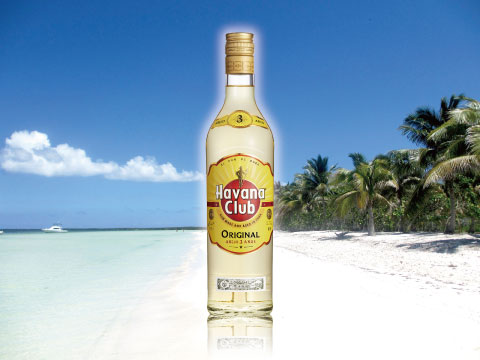
Photo courtesy | Pernod Ricard Japan
Origin | Cuba
Flavor, Aroma & Characteristics
Pour it into a glass, and sweet notes of vanilla, caramel, and banana bloom immediately. On the palate, though, it’s fresh and light rather than heavy, with a subtle whisper of oak surfacing quietly beneath a crisp finish.
Elegance over flash, balance over pure sweetness — that’s the character this bottle carries. Poured into a Mojito, it lifts mint and lime; in a Daiquiri, it sharpens fruity acidity. There’s a persuasive quality here that seems to say, “this is what Cuban rum tastes like.”
Origin & History

Havana Club was founded in 1878 by José Arechabala in Cuba. After the Cuban Revolution brought nationalization and years of upheaval, French drinks giant Pernod Ricard and the Cuban government jointly established Havana Club International in 1994, growing the brand into a global name registered in over 180 countries today.
Ernest Hemingway famously loved his Mojito, and this is the authentic flavor that’s been poured under the Cuban sun for generations. That history and pride sit condensed inside a single bottle. Drinking this is, quite literally, drinking Cuba.
Production & What Sets It Apart
What sets Havana Club 3 Años apart from other white rums is three full years of oak aging. Most white rums skip aging entirely or finish quickly in stainless steel, but Havana Club takes “aguardiente” — a base spirit refined from Cuban molasses through column distillation — and ages it patiently in old oak barrels. Only afterward does charcoal filtration strip out color and rough edges, leaving a clear, transparent finish.
The sweetness and fruity depth that aging built in stay fully intact. Where Bacardí and Ronrico sell themselves on lightness, Havana Club 3 Años is a white rum defined by the lingering richness aging leaves behind.
Myers’s Rum Platinum White
Fruit-forward and vibrant — a natural fit for tropical cocktails.

Photo courtesy | Kirin
Origin | Jamaica
Flavor, Aroma & Characteristics
Tip the glass, and sweet tropical fruit aroma unfolds right away. On the palate, though, there’s no heaviness at all — a smooth, light-footed sip that shows a completely different face from the rich dark rum that made Myers’s famous. Vanilla and banana notes glide gently across the tongue, finishing with a clean, polished aftertaste.
Mix it with soda and the crispness stands out; add fruit juice and the sweetness blooms. It works just as well with cola or tonic, and holds up fine on its own over ice. Few white rums cover this much ground.
Origin & History

Photo | Cityscape of Kingston, Jamaica
In 1879, in Kingston, Jamaica, Fred L. Myers poured his energy into rum-making. Sugarcane grown in Jamaica’s distinctive climate and soil, combined with a closely guarded blending technique, produced a dark rum that earned worldwide recognition. For well over a century since, Myers’s has stood as a byword for Jamaican rum on bar shelves around the globe.
Platinum White carries that same brand pride and tradition into the white rum category — a natural extension of dark rum expertise into an entirely different style, built on the same foundation.
Production & What Sets It Apart
What fundamentally sets Myers’s Platinum White apart from other white rums is where it starts. Most white rums skip aging or finish quickly, but Platinum White selects just 20 base spirits out of more than 200 candidates and ages them for years in white oak barrels — the same painstaking process used for Myers’s Original Dark. Only after that does careful charcoal filtration strip away color and rough edges, leaving behind nothing but the rich aroma and flavor that aging built.
I’d argue that time and effort are exactly what makes the world inside this glass feel deeper than most.
8 Best White Rum Brands | 4 Picks for Enthusiasts & Connoisseurs
White Rum Comparison Chart (4 Brands)

Photo | From left to right: Cor Cor, Selvarey, Acoua Rum, and Planteray
| Item | Cor Cor Agricole | Selvarey | Acoua Rum | Planteray Three Stars |
|---|---|---|---|---|
| Aroma | Citrus, herbs, and the green vitality of raw sugarcane | Vanilla and rich, sweet tropical sugarcane | Sugarcane’s vivid sweetness, with a faint depth from brown sugar | Citrus, tropical fruit, and white pepper |
| Flavor | Fresh and wild, with island character lingering in the finish | Rich and mellow — smooth enough not to tire the palate | Soft and gentle, with a mild sweetness from natural spring water | Layered complexity of vanilla and tropical fruit |
| Standout Trait | Made using the agricole method, just 3% of world rum production, from a single annual sugarcane harvest in Japan | Co-owned by Bruno Mars; a blend of 3- and 5-year-aged rums | Kagoshima mainland’s first rum, made with organic molasses, brown sugar, and natural spring water | A blend of three islands and three distillation methods, developed specifically for bartenders |
Cor Cor Agricole
100% Okinawan sugarcane — a rare, masterful example of Japan’s agricole method.

Photo courtesy | Grace Rum
Origin | Japan
Flavor, Aroma & Characteristics
The first sip is deceptively clean — crisp enough that you might wonder, “wait, is this actually a white rum?” The second sip tells a different story: raw sugarcane’s full-bodied sweetness unfolds quietly alongside citrus and herbal freshness. By the third sip, the finish keeps going, and your hand reaches for the glass again almost on its own.
No added sugar, no flavoring, no coloring — just sugarcane grown on Minamidaitō’s soil, under its sun, having survived its typhoons. If I had to pick one white rum to drink neat on the rocks, I’d reach for Cor Cor Agricole without hesitation.
Origin & History

“Let’s make rum.” One woman, drinking rum at a bar, decided to act on that thought. She had a hunch that Okinawa — an island built on sugarcane — could make real rum, and started from zero: securing a distilling license, finding a master brewer.
In 2004, that push became Grace Rum Co. after being selected for an Okinawa Electric venture program. The name Cor Cor comes from the Spanish “coral corona” (coral crown), reflecting the sea and sky of Minamidaitō. The story later became a novel, Kaze no Majimu, and was even adapted into a film. One person’s determination rewrote the history of Japanese rum.
Production & What Sets It Apart
Roughly 97% of the world’s rum is made using the industrial method — molasses left over after sugar has been refined out of sugarcane. Cor Cor Agricole uses the remaining 3%: the agricole method. Sugarcane is cut, pressed on the spot, and the raw juice goes straight into fermentation and distillation. Since fermentation begins the moment cane is cut, this only works near the fields, during harvest season (January to April) — which is exactly why it’s made just once a year, in limited quantity.
That’s a fundamentally different starting point from Bacardí or Ronrico, which rely on molasses for stable, year-round production. This process is exactly why Cor Cor isn’t just tasted — it’s experienced.
- Corcor Official ⇒ https://rum.co.jp/
SelvaRey White Rum
Single-estate Panamanian rum, personally shaped by Bruno Mars — polished and complex.

Flavor, Aroma & Characteristics
Lift the glass, and vanilla and sugarcane’s gentle sweetness unfold slowly. The first sip brings genuine aged-rum richness across the tongue, yet it slides down smooth without any weight holding it back.
There’s real flavor here without heaviness, and the finish carries an elegant, lingering quality. In a cocktail, it draws out other ingredients’ sweetness; on the rocks or with ginger ale, its own character still comes through clearly. First-timers are surprised at how easy it is to drink, and rum enthusiasts nod along thinking, “yes, this is the real thing.” It’s honest with both kinds of palates.
Origin & History

Photo | Panama City, Republic of Panama
SelvaRey’s story starts with a gift. Early on, the three founders sent a bottle each of white and chocolate rum to Grammy-winning artist Bruno Mars. Having spent his childhood in Hawaii, where he developed a genuine love for Mojitos and Piña Coladas, Bruno was won over by the flavor.
After building trust with the founders over time, he became an owner of the brand and personally shaped the bottle design and branding. “Selva” (jungle) plus “Rey” (king) — true to its name, a rum built to rule over the Panamanian wilderness was born.
Production & What Sets It Apart
What sets SelvaRey White apart comes down to a double layer of craftsmanship. First, it’s distilled slowly in a copper column still dating back to 1922 — equipment with over a century of history behind it. From there, master blender “Don Pancho” combines three-year-aged and five-year-aged stock in careful balance.
That depth exists precisely because Don Pancho, who spent over 35 years building his reputation as a rum master in Cuba, left for love and built this distillery in the Panamanian jungle instead. A final carbon filtration strips color alone, leaving flavor completely untouched. That’s the real story behind a “white rum with the richness of aging.”
Acoua Rum White
The mainland Kagoshima craft rum, distilled with local terroir and cane character.

Origin | Japan
Flavor, Aroma & Characteristics
Pour it into a glass, and sweet, showy sugarcane aroma rises softly — a mild, fresh sweetness shaped by Kagoshima’s climate and the southern sun. On the palate, brown sugar’s quiet depth and the softness of natural spring water come together as one. The finish is clean, with pleasant lingering warmth after each sip.
Mix it with soda and its crispness opens right up; pair it with cola and the tropical character pops. Even so, it never overpowers as a cocktail base. This is a rum that quietly, but unmistakably, says “made in Kagoshima.”
Origin & History

Photo | The Acoua tree, via Wikipedia
Oyama Jinshichi Shoten was founded in 1875 in Ibusuki, Kagoshima Prefecture. It began as a kimono shop, not a distillery — a history still reflected in the “Shoten” (shop) in its name rather than “Shuzo” (brewery).
Nearly 150 years into its history as a longstanding sweet potato shochu producer, the brewery took on a new challenge in 2017. Sixth-generation heir Yohei Oyama, who brought experience from a Tokyo liquor trading company, returned home and opened the door to spirits production, including the craft gin JIN7. In February 2022, that path led to Acoua Rum White — Kagoshima mainland’s first rum. The name honors the sacred Acoua tree of Miyagahama, the district home to the distillery, carrying real respect and pride for the land.
Production & What Sets It Apart
What sets Acoua Rum apart from other white rums is its commitment to local sourcing at every step. The molasses comes from an organic producer, Unmaka-tou, based in the same city as the distillery, and Kagoshima-grown brown sugar is added on top, giving the cane’s natural sweetness extra depth and richness. The brewing water is drawn from natural springs near Miyagahama, close to Tosenkyo, a valley recognized by Japan’s Ministry of Land as one of the country’s 100 best water sources.
Where Bacardí and Ronrico lean on large-scale production for consistency, Acoua Rum is a small-batch craft rum shaped by just five artisans. 150 years of shochu-distilling expertise, poured into a new vessel called rum — that’s the real source of its character.
Planteray Three Stars
A blend of Jamaica, Barbados, and Trinidad — the high-quality choice for cocktail pros.

Origin | West Indies
Flavor, Aroma & Characteristics
Bring the glass close, and candied citrus peel and sweet tropical fruit open up first, with white pepper and fresh ginger’s spicy edge following right behind. On the palate, vanilla-like roundness layers together with banana and coconut, and the finish leaves a quiet, powerful tropical depth carried by the Jamaican rum in the blend.
This is complexity that overturns the assumption that “white rum has no character” in a single sip — and it still lifts a cocktail’s other ingredients, while holding its own completely neat. I’d argue that’s exactly why professional bartenders keep coming back to it.
Origin & History

Photo | Plantation imagery
Planteray’s roots trace back to the rum division of Maison Ferrand, the storied French Cognac house. Master blender Alexandre Gabriel built Three Stars in response to a real complaint from working bartenders: “there’s no white rum we actually want to use.” The answer was a blend of premium base rums from three Caribbean islands.
The rename from the old brand name “Plantation” to “Planteray” came from a genuine reckoning with the word’s historical weight. Since 2025, the new name has rolled out in Japan too, carrying the same philosophy and quality into its next chapter.
Production & What Sets It Apart
What fundamentally sets Three Stars apart from other white rums is its commitment to diversity: three terroirs, three distillation methods, three fermentation times. Barbados ferments 72 hours using both column and pot stills; Trinidad ferments 72 hours in a column still; Jamaica ferments for a full two weeks in a pot still.
The master blender combines each island’s character with precision — Barbados contributing richness and balance, Trinidad finesse, Jamaica a powerful backbone. With a double gold medal from the San Francisco World Spirits Competition among its accolades, this is a level of complexity no single-origin white rum can reach.
How to Enjoy White Rum | Serving & Mixing Ideas
Neat or on the Rocks | Enjoying Sugarcane’s Natural Freshness

It’s easy to assume a spirit this clean and smooth must be mild — it isn’t, and that’s exactly the trap worth knowing about before you pour it neat. For sipping straight, chill the bottle briefly in the freezer and serve in a shot glass. Agricole and premium bottlings like Cor Cor Agricole or Santiago de Cuba benefit the most from this: chilling sharpens raw sugarcane’s fresh sweetness and keeps the flavor genuinely clear. On the rocks, a single large ice cube is the way to go — sip slowly, and the drink softens as the ice melts.
Twist | A single squeeze of lime brightens the flavor instantly, and a few mint leaves add a Mojito-like coolness.
Caution | Because it drinks so cleanly, it’s easy to forget this is roughly 40% ABV — always keep a chaser nearby and take your time.
Carbonated Mixers | Easy Caribbean Refreshment

Soda is the simplest and most reliable way to drink white rum. Pour at a 1:3 or 1:4 rum-to-soda ratio, add a squeeze of lime, and you’ve got a genuinely refreshing “rum soda” — Bacardí Superior and Ronrico both shine here in particular.
Cola brings out white rum’s clarity against cola’s sweetness — lighter than a gold rum and coke, but a clean, easy-drinking “rum coke” all the same. Ginger ale’s crisp bite pairs beautifully with white rum’s clean sweetness; add lime and mint, and you’re close to Mojito territory. Tonic water’s gentle bitterness against white rum’s lightness makes a crisp “rum and tonic,” equally good as a pre-dinner drink.
Twist | Citrus — lime, lemon, or grapefruit — lifts any of these mixers, and fresh mint adds visual tropical flair.
Caution | Soda and cola mixes go down easily, which tends to speed up your pace. I’d pace it at one to two drinks an hour.
As a Serious Cocktail Base
White rum is the most widely used rum base behind bars worldwide, and there’s a clear reason why: its clean, neutral character lifts whatever flavor it’s paired with, from fruity cocktails to crisp, refreshing ones.
Bacardí Superior works well across the board, while Cor Cor Agricole is best suited to neat pours or simple cocktails where the spirit’s own character can lead.
Caution | Cocktails built with fruit juice or syrup taste deceptively easy to drink, but the alcohol content doesn’t change — frozen cocktails especially are worth pacing yourself on rather than working through several in a row.
White Rum FAQ | 5 Questions Every Drinker Asks


