

True to its name, the Shungyo cocktail, or “Spring Dawn,” pours the drowsy calm of a famous Tang dynasty poem into a cocktail glass. Created by legendary Japanese bartender Kazuo Ueda, this sake cocktail holds a quiet surprise: vodka is the larger pour, yet soft sake leads every sip.
A spoonful of green tea liqueur adds gentle depth, and a salt-pickled cherry blossom floats on top like the first petal of spring. It’s an elegant Japanese cocktail worth stirring up tonight.
Recipe & How to Make
Ingredients

Recipe no.196
- Sake — 2/3 oz (20ml)
- Vodka — 1 + 1/3 oz (40ml)
- Green tea liqueur — 1 tsp
- Salt-pickled cherry blossom
・1 tsp = one bar spoon
Directions

Fill a mixing glass about 70–80% with ice, stir to chill it, and pour off the excess water.
Add the sake, vodka and green tea liqueur to the mixing glass, and stir well.
Strain into the glass, float one or two salt-pickled cherry blossoms on top, and it’s ready.
・Technique | Stir
・Glass | Cocktail glass
・ABV | Around 31–32%
・Best Enjoyed | Daytime / Before dinner
Origin & Characteristics of the Shungyo
What Does “Shungyo” Mean?

Shungyo is the Japanese reading of “Spring Dawn” (春暁), a short poem by Meng Haoran (689/691–740), a great poet of China’s Tang dynasty. Its opening line, “In spring sleep, I don’t notice the dawn,” is known to almost everyone in Japan.
The poem captures a drowsy spring morning: birdsong all around, memories of the night’s wind and rain, and quiet wonder at how many blossoms have fallen. That gentle, fleeting mood is exactly what this cocktail pours into the glass.
Origin & History

The Shungyo was created in 1983 by Kazuo Ueda, one of Japan’s most celebrated bartenders, for a cocktail fair at L’Osier, the French restaurant run by Shiseido Parlour in Tokyo. The fair’s theme was Japan’s four seasons, so Ueda chose spring and built the drink around a dawn still half asleep.
His idea was simple yet clever. Vodka is the larger pour, but dry, mellow sake leads the flavor, because neutral vodka adds strength without covering the sake’s aroma. Green tea liqueur and a salt-pickled cherry blossom complete the picture, the green chosen to make the pink blossom glow.
Ueda later published the recipe in his 1989 book, and it remains a modern classic of Japanese bartending.
Flavor & Recommendations
Flavor & Character
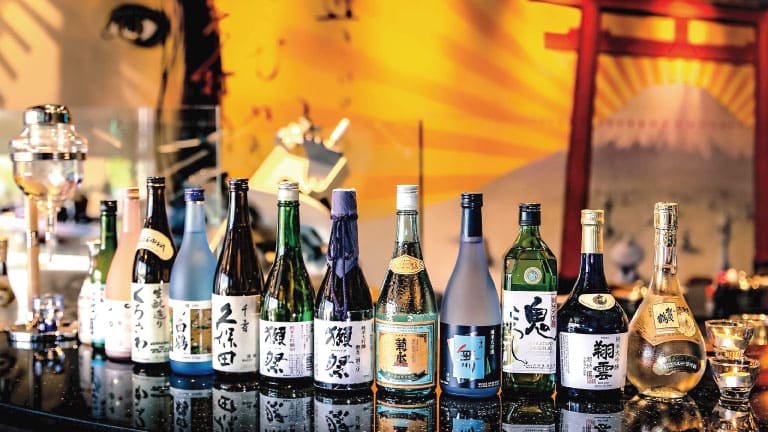
Gentle rice aroma from the sake meets the clear backbone of vodka, and green tea liqueur adds a soft, leafy note. Stirred quietly in a well-chilled mixing glass, the drink turns glassy and smooth.
In one sip, pale rice fragrance, a crisp lift of alcohol and a light tea finish arrive in layers, ending dry and elegant. The cherry blossom brings a hint of salt and a picture of spring.
I always soak the blossom in water first to soften its salt, so it seasons the drink instead of taking over.
Tips, Twists & Food Pairings

Tips
- Common mistake: using the blossom straight from the jar — Salt-pickled blossoms are packed in salt, which can overpower the sake’s soft aroma. Rinse and soak them in cool water, then pat dry before floating.
- Choose a clean, dry sake and chill it well — The original recipe uses honjozo sake, light and crisp. Its clean rice aroma shines through the vodka, keeping the drink dry and elegant.
- Stir, don’t shake — Shaking clouds the drink and blurs its clear, glassy look. I’d always stir gently for about 15 seconds, because that keeps the sake’s delicate aroma intact.
Twists
- Sakura Shungyo — Add 1 tsp (5ml) of sakura liqueur. Its soft cherry-blossom aroma echoes the floating blossom and makes the drink feel even more like a spring morning.
- Shochu Shungyo — Swap the vodka for rice shochu. The gentle rice notes blend naturally with the sake, turning it into an all-Japanese, rounder version.
Food Pairings
- Sea bream sashimi — The mild white fish matches the sake’s soft rice aroma, while the blossom’s hint of salt seasons each bite.
- Sakura mochi — The salted cherry leaf echoes the floating blossom, and the sweet bean paste softens the drink’s dry strength.
- Lightly salted edamame — Their fresh, green flavor mirrors the green tea liqueur, and the salt keeps each sip crisp.
〚 Recommended Twist 〛
The original Shungyo is quite strong. For a lighter drink, try more sake and less vodka, a little extra green tea liqueur, or a splash of sakura liqueur.
Here’s my favorite lighter version
・Sake — 1 + 1/3 oz (40ml)
・Vodka — 1/2 oz (15ml)
・Green tea liqueur — 1 tsp (5ml)
・Lime juice — 1 tsp
・Salt-pickled cherry blossom
The lower strength, the green tea aroma and a touch of lime make this version especially easy to enjoy.


